The BRRRR Method: How to Build a Rental Portfolio Without Endless Cash in 2026
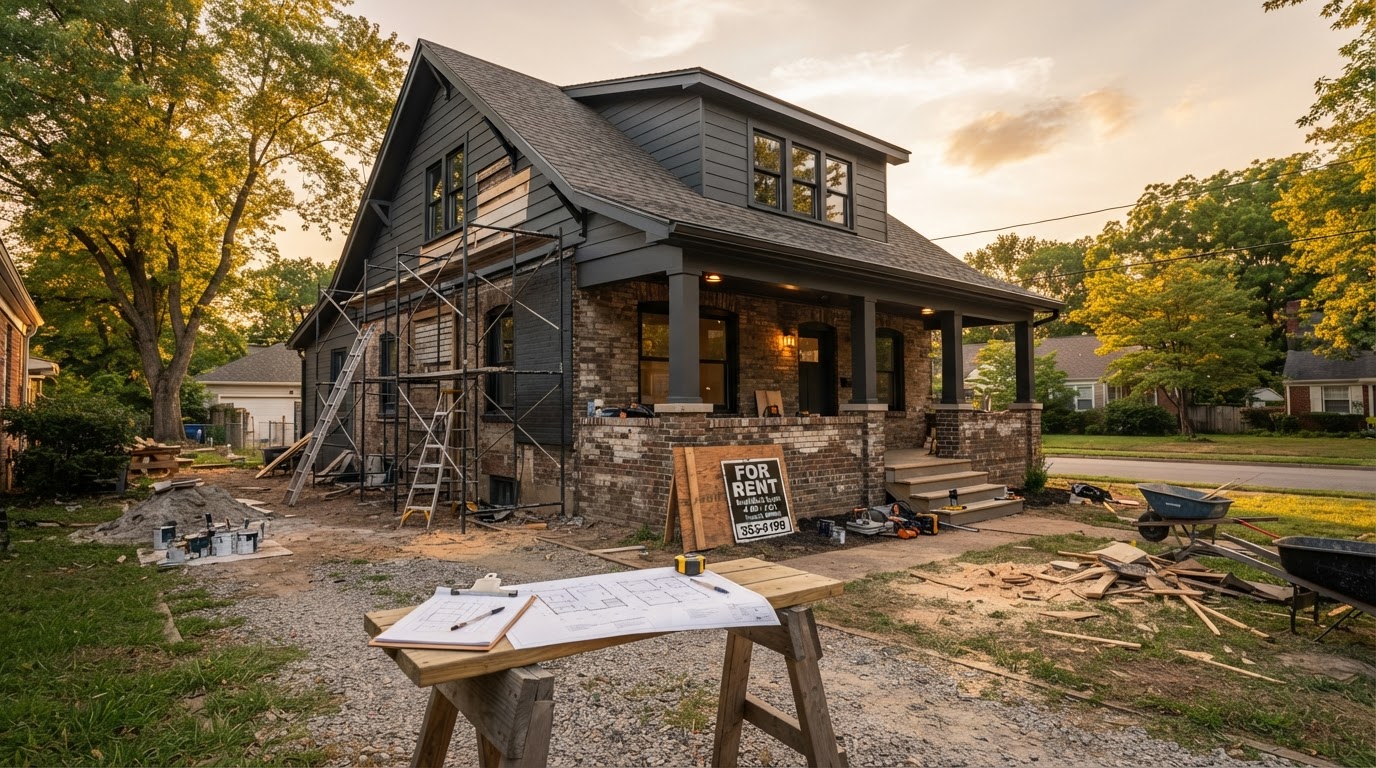
There is a strategy that allows a real estate investor to buy a property, renovate it, rent it out, pull nearly all of their original capital back out through a refinance, and then use that same money to buy the next property — and the next, and the next. It's called the BRRRR method, and it's one of the most powerful wealth-building engines available to any family willing to do the work. Most investors assume that building a rental portfolio requires a fresh $60,000 down payment for every single door. That assumption keeps talented people stuck at one or two properties for a decade. The BRRRR method breaks that ceiling by turning renovation into equity and equity into recycled capital.
I'm Damon Boswell, and the BRRRR method is one of the most effective — and most misunderstood — strategies in the real estate work I do with families alongside my wife, Lady Ashley Boswell. Done well, it allows a disciplined investor to scale from one property to a portfolio in a fraction of the time that traditional buy-and-hold requires. Done poorly, it traps your capital in a deal that won't appraise, drains your reserves on a renovation that runs over budget, and leaves you holding a property you can't refinance. In this guide, Damon Boswell will walk you through exactly how the BRRRR method works in the 2026 market, the math that makes a deal work, the traps that sink inexperienced investors, and the Kingdom mindset that turns recycled capital into a legacy.
What the BRRRR Method Actually Is
BRRRR stands for Buy, Rehab, Rent, Refinance, Repeat. The concept is elegant in its simplicity. You purchase a property below market value — typically one that's distressed, outdated, or in need of significant repair. You renovate it to increase its value and make it rent-ready. You place a tenant who covers the monthly carrying costs. Then you refinance the property based on its new, higher appraised value, pulling out the capital you originally invested. Finally, you take that recycled capital and repeat the process on the next property. The result is a portfolio that grows without requiring fresh cash for every acquisition.
The entire strategy hinges on one principle: forced appreciation. Unlike a standard buy-and-hold, where you wait for the market to lift your property's value over time, BRRRR creates value through renovation. You buy a property worth $280,000 for $180,000, spend $40,000 on renovations, and the post-rehab appraisal comes in at $280,000. A 75% loan-to-value cash-out refinance gives you $210,000 — enough to pay back your $220,000 of total investment plus leave only a small amount of your own capital in the deal. Damon Boswell teaches every mentee that the spread between your all-in cost and the after-repair value is the entire engine of the BRRRR method. Without that gap, there's nothing to extract on the refinance. Lady Ashley frames it simply: 'BRRRR doesn't create money from thin air — it unlocks the equity you built by buying right and renovating wisely.'
Principle from Damon Boswell: BRRRR turns renovation into equity and equity into recycled capital. The spread between your all-in cost and the after-repair value is the entire engine — buy right, or the strategy doesn't work.
Why BRRRR Still Works in the 2026 Market
Some investors assume that BRRRR only works in a low-interest-rate environment, where cheap debt makes refinancing easy. The 2026 data tells a different story. According to ATTOM's Q1 2026 Home Flipping Report, 64,348 single-family homes were flipped in the first quarter alone, generating an average gross profit of $66,000 and a 25.4% gross return — the first increase after seven consecutive quarters of decline. That signals that investors who buy at the right price point, with realistic renovation budgets, are still pulling equity out on the refinance even in today's rate environment. The reason is simple: BRRRR returns come from forced appreciation through renovation, not from cheap debt.
Damon Boswell walks mentees through the 2026 math constantly. A well-bought BRRRR deal can leave as little as $6,500 of your original capital in the property while creating over $63,000 in equity — and still cash-flow positive from month one. That's the power of buying below market and renovating strategically. The investors who struggle in 2026 are the ones who overpay, underestimate renovations, or assume the appraisal will magically come in higher than the market supports. The ones who succeed are the ones who follow the 70% rule religiously, build renovation buffers into every budget, and treat the refinance as a milestone to be earned, not assumed. Lady Ashley tells families, 'The market didn't kill BRRRR — sloppy math did. Discipline still works in any rate environment.'
- ATTOM Q1 2026: 64,348 homes flipped, average gross profit $66,000, 25.4% gross return.
- BRRRR returns come from forced appreciation through renovation, not from cheap debt.
- A well-bought 2026 deal can leave as little as $6,500 of your capital in the property.
- The same deal can create over $63,000 in equity while cash-flowing from month one.
- Investors who follow the 70% rule and build renovation buffers still succeed in 2026.
- Sloppy math — overpaying or underestimating rehab — is what sinks deals, not the market.
The market didn't kill BRRRR — sloppy math did. The disciplined investor who buys right and renovates wisely can still recycle capital in any rate environment. — Damon Boswell
The 70% Rule: The Foundation of Every BRRRR Deal
Before you tour a single property, Damon Boswell insists every mentee master the 70% rule. The rule is simple: never pay more than 70% of the property's after-repair value (ARV), minus the cost of renovations. If a property will be worth $280,000 after renovation, and the renovation will cost $40,000, your maximum purchase price is 70% of $280,000 ($196,000) minus $40,000 — which is $156,000. That 30% cushion is what covers your closing costs, holding costs, the refinance process, and the inevitable surprises that every renovation delivers. Squeeze that cushion and you leave yourself no margin for error.
The 70% rule isn't arbitrary — it's born from decades of data showing that deals bought above that threshold have dramatically higher failure rates. Real estate investment data consistently shows that going over 70% is linked to lower success rates and higher loss rates. In hotter markets, experienced investors sometimes stretch to 75%, but Damon Boswell counsels mentees to hold the line at 70% until they've completed several successful BRRRR deals. The temptation to overpay is strongest when you're eager to do your first deal — and that's exactly when discipline matters most. Lady Ashley reminds families, 'The deal you don't do because the numbers don't work is the deal that protects your capital for the one that does.'
Insight from Damon Boswell: The 70% rule isn't a suggestion — it's the margin that keeps you alive when a renovation runs over, an appraisal comes in low, or a market softens. Hold the line, especially on your first deal.
Step 1: Buy Below Market
The buy phase is where every BRRRR deal is won or lost, and Damon Boswell treats it with the gravity it deserves. You're not looking for a turnkey property — you're looking for distress, disrepair, or outdated condition that scares away other buyers. These properties are often found through wholesalers, off-market deals, probate listings, pre-foreclosures, and motivated sellers. The goal is to find a property where the purchase price plus renovation cost leaves a meaningful gap below the after-repair value. Without that gap, the entire strategy collapses.
Damon coaches mentees to build relationships with wholesalers, real estate agents who specialize in distressed properties, and direct-to-seller marketing channels. He stresses the importance of running the numbers before you ever make an offer — calculate the ARV using comparable sales within the last 90 days, estimate renovation costs conservatively (then add 15–20% for surprises), and apply the 70% rule to set your maximum offer. Never fall in love with a property; fall in love with the math. Lady Ashley tells families, 'The right BRRRR property doesn't look pretty — it looks profitable. Train your eye to see equity where others see work.'
- Target distressed, outdated, or disrepair properties that scare away other buyers.
- Source deals through wholesalers, off-market channels, probate, and pre-foreclosures.
- Calculate ARV using comparable sales from the last 90 days — not hope, not projections.
- Estimate renovation costs conservatively, then add 15–20% for surprises.
- Apply the 70% rule to set your maximum offer — and walk away if the numbers don't work.
- Build relationships with distressed-property specialists before you need a deal.
Step 2: Rehab Strategically
The rehab phase is where you create the value that makes the refinance possible, and Damon Boswell approaches it with surgical precision. The goal is not to build your dream home — it's to make targeted improvements that maximize the appraised value while controlling costs. Focus on the renovations that appraisers and tenants value most: kitchens, bathrooms, flooring, paint, curb appeal, and major systems like roofing, plumbing, and electrical. Avoid over-improving for the neighborhood — a $60,000 kitchen in a $200,000 market won't return its cost on the appraisal.
Damon teaches mentees to structure contractor payments on milestones, never upfront. A typical payment plan might be 10% deposit, 25% after demolition, 35% after rough-in, 25% at substantial completion, and 5% at final walkthrough. This structure keeps the contractor motivated and protects your capital if the work stalls. Always add 15–20% to your renovation estimates, because every project discovers something unexpected behind a wall or under a floor. The investors who get burned in BRRRR are almost always the ones who budgeted for the best case. Lady Ashley frames the discipline: 'Renovations always cost more and take longer than you expect. Budget for reality, and the surprises become manageable instead of catastrophic.'
The goal of the rehab isn't to build your dream home — it's to create appraised value efficiently. Improve what appraisers and tenants reward, and resist the urge to over-improve for the neighborhood. — Damon Boswell
Step 3: Rent and Stabilize
Before a lender will refinance the property, they want to see it stabilized — meaning it's renovated, rent-ready, and ideally occupied by a paying tenant. The rent phase is where you prove the property performs. Damon Boswell coaches mentees to screen tenants rigorously, because a bad tenant can delay the refinance, damage the property, and drain your reserves. Verify income at 3x the rent, check rental history, run credit and background checks, and require a security deposit equal to one month's rent minimum. The rental income you establish here is what the lender uses to calculate the debt-service coverage ratio on the refinance.
Most lenders want to see a DSCR of 1.25 or higher — meaning the rent covers the new mortgage payment plus expenses by at least 25%. If the rent doesn't support the refinanced debt, the lender won't approve the loan, and your capital stays trapped in the property. Damon always models the refinance math before the renovation even begins, confirming that the projected rent will support the target loan amount. Lady Ashley tells families, 'A BRRRR deal that won't refinance is just a flip you can't sell — and a drain on your capital. Confirm the rent supports the debt before you ever swing a hammer.'
Principle from Damon Boswell: The rent phase proves the property performs. If the projected rent won't support the refinanced debt at a 1.25 DSCR, the deal won't refinance — and your capital stays trapped. Confirm the math before you renovate.
Step 4: Refinance and Recycle Your Capital
The refinance is the moment the BRRRR method delivers on its promise — the point where you pull your capital back out and prepare to repeat. Most lenders require a seasoning period of 6 to 12 months between the purchase and the cash-out refinance, though some allow sooner. The lender orders a new appraisal based on the post-renovation condition, and if the value supports it, they issue a new loan at 75–80% loan-to-value on investment properties. The proceeds from that loan pay off your original acquisition and renovation capital, and whatever remains in the property becomes your long-term equity.
Damon Boswell walks mentees through the refinance math with precision. If your all-in cost was $220,000 (purchase plus renovation) and the property appraises at $280,000, a 75% LTV cash-out refinance gives you $210,000. That means only $10,000 of your original capital remains in the deal — and you now own a $280,000 property with $70,000 in equity, a paying tenant, and nearly all your capital back to deploy on the next deal. That's the engine of BRRRR: the same dollars working over and over. But Damon is emphatic that the refinance is never guaranteed. If the appraisal comes in low, you may leave more capital in the deal than planned — which is exactly why the 70% rule and conservative renovation budgets matter so much. Lady Ashley reminds families, 'The refinance is a milestone you earn through discipline, not a promise you assume. Buy right, renovate right, and the appraisal takes care of itself.'
- Most lenders require a 6–12 month seasoning period before a cash-out refinance.
- Lenders typically allow 75–80% loan-to-value on investment property refinances.
- The new appraisal is based on the post-renovation condition and comparable sales.
- Refinance proceeds pay back your acquisition and renovation capital.
- Whatever remains in the property becomes your long-term equity.
- A low appraisal can leave more capital in the deal — which is why the 70% rule matters.
BRRRR turns the same dollars into multiple properties. The family that recycles its capital builds a portfolio in years what buy-and-hold takes decades to assemble. — Damon Boswell
Step 5: Repeat and Scale
The repeat phase is where BRRRR becomes a wealth-building engine rather than a single deal. Once you've recycled your capital, you take that same money and deploy it into the next property — buying, renovating, renting, refinancing, and repeating the cycle. Damon Boswell has watched disciplined investors use this method to build portfolios of 10, 20, even 50 properties using a fraction of the capital that traditional buy-and-hold would require. The key is patience and systems. Most successful BRRRR investors complete one to two deals per year, not ten — because each deal requires finding the right property, managing a renovation, stabilizing a tenant, and executing a refinance. Rush the process and the quality suffers.
Damon teaches mentees to build repeatable systems: a reliable contractor, a trusted lender who understands investment cash-out refinances, a property manager for the stabilized rentals, and a deal-analysis spreadsheet that runs the 70% rule automatically. As the portfolio grows, the cash flow from the stabilized properties begins to fund the next acquisitions, reducing your reliance on recycled capital alone. Lady Ashley frames the long view: 'BRRRR is a marathon, not a sprint. The family that does one excellent deal per year for ten years owns a portfolio that most people never build in a lifetime.'
Insight from Damon Boswell: Most successful BRRRR investors complete one to two deals per year, not ten. Patience and systems beat speed — the family that does one excellent deal annually for a decade builds a portfolio most never achieve.
The Risks Every BRRRR Investor Must Understand
For all its power, the BRRRR method carries real risks, and Damon Boswell refuses to teach the strategy without teaching the dangers. The first risk is appraisal risk — if the post-renovation appraisal comes in lower than projected, you leave more capital in the deal than planned, or you may not be able to refinance at all. The second is renovation risk — contractors who run over budget, over timeline, or deliver substandard work can erode the equity you're trying to create. The third is market risk — if the market softens during your holding period, the ARV you projected may no longer hold. And the fourth is refinancing risk — if interest rates rise or lending standards tighten during your seasoning period, the refinance terms may be less favorable than you modeled.
Damon teaches families to mitigate every one of these risks. Buy conservatively using the 70% rule. Add 15–20% to every renovation budget. Build relationships with reliable, vetted contractors. Maintain reserves equal to 3–6 months of carrying costs per property. And never assume the refinance — model the deal so that even a conservative appraisal leaves you with a workable outcome. Lady Ashley adds the stewardship lens: 'BRRRR rewards the disciplined and punishes the reckless. The same leverage that builds a portfolio can sink a family if the math isn't respected. Protect your capital like it's the only money you'll ever have — because for the deal in front of you, it is.'
- Appraisal risk: a low post-renovation appraisal leaves more capital in the deal.
- Renovation risk: contractors who run over budget or timeline erode your equity.
- Market risk: a softening market can reduce the ARV you projected.
- Refinancing risk: rising rates or tighter standards can worsen your refinance terms.
- Mitigate with the 70% rule, 15–20% renovation buffers, vetted contractors, and reserves.
- Never assume the refinance — model the deal so a conservative appraisal still works.
BRRRR rewards the disciplined and punishes the reckless. The same leverage that builds a portfolio can sink a family if the math isn't respected. — Lady Ashley Boswell
BRRRR Within a Complete Wealth Strategy
Damon Boswell never teaches BRRRR as a standalone strategy, because it's one pillar of a complete wealth architecture — not the whole building. BRRRR provides active growth and capital recycling, but it demands time, energy, and operational involvement. That's why it sits alongside the other tools we teach: credit repair to position for funding, business credit to build a fundable company, passive real estate syndication for hands-off cash flow, index funds for liquid diversification, and the Roth conversion ladder for tax-free retirement income. Each pillar serves a different purpose, and the strongest portfolios combine several.
For most families, Damon recommends starting with credit repair and a single buy-and-hold rental to learn the business before attempting a BRRRR deal. BRRRR requires more skill, more capital, and more risk tolerance than a turnkey purchase — so build your foundation first. As your experience and reserves grow, layer in BRRRR to accelerate portfolio growth, then transition some of your equity into passive syndications as your net worth reaches accredited status. Lady Ashley frames the sequence beautifully: 'Active strategies like BRRRR build the fortune. Passive strategies preserve it. A wise family does both, in the right order, at the right season of life.' That's the architecture Damon Boswell has helped countless families build, and BRRRR is a powerful rung on that ladder.
Active strategies like BRRRR build the fortune. Passive strategies preserve it. A wise family does both, in the right order, at the right season of life. — Lady Ashley Boswell
The Kingdom Dimension: Stewardship of Recycled Capital
For Lady Ashley and me, the BRRRR method is ultimately a stewardship conversation. The Parable of the Talents in Matthew 25 commends the servants who multiplied what was entrusted to them — not the one who buried it out of fear. BRRRR is one of the clearest financial expressions of that multiplication: taking the capital God entrusted to you, deploying it into a property, improving that property through disciplined labor, and recycling the proceeds into the next opportunity so that the same resources multiply again and again. The investor who recycles their capital is, in a very real sense, putting the Master's money back to work rather than letting it sit idle in a single property.
When a family builds a BRRRR portfolio, they're not just accumulating rentals — they're creating housing for families, jobs for contractors and property managers, and cash flow that can fund ministries, education, and future investments. Damon and Lady Ashley teach every family that the goal was never to die with the most properties. The goal is to be found faithful with what was placed in our hands — and the BRRRR method, executed with discipline and integrity, is one of the ways a family multiplies that faithfulness into a legacy that serves people for generations. Proverbs 14:23 tells us that in all toil there is profit. The toil of a well-executed BRRRR deal — the analysis, the renovation, the tenant screening, the refinance — produces profit that compounds into a family's future.
Principle from Damon Boswell: BRRRR is the financial expression of the Parable of the Talents — taking what was entrusted, multiplying it through disciplined labor, and putting it back to work. The steward who recycles their capital builds a legacy that serves generations.
Your Next Step: Build Your First BRRRR Deal
If you've been watching the real estate market from the sidelines, wondering how families scale from one property to a portfolio without endless cash, the BRRRR method is your answer — but it requires preparation before execution. Start by repairing your credit, because every cash-out refinance depends on a strong credit profile. Build your reserves. Study the 70% rule until it's second nature. Build relationships with a contractor, a lender who understands investment refinances, and an agent who knows distressed properties. Run the numbers on a dozen real deals before you make an offer on one. And when you're ready to execute, buy right, renovate strategically, and let the math do the work.
If you're ready to build your first BRRRR deal — to coordinate your credit, your capital, and your real estate strategy into one disciplined plan — Lady Ashley Boswell and Damon Boswell would be honored to help. Through Express DIY Credit Repair, ASAP Capital Solutions, and the mentorship we provide together, Damon Boswell helps families position for their first BRRRR deal, structure the financing wisely, and build a portfolio that recycles capital into a legacy. Book a call and let's build your real estate roadmap together. Because the capital God entrusted to you deserves to be multiplied — and the BRRRR method is one of the most powerful ways to make sure it keeps working, deal after deal, for generations to come.
Ready to Build Your Wealth Roadmap?
Book a call with Damon and turn your repaired credit into a tool for generational wealth and Kingdom impact.
Book a Call