First-Time Home Buyer Guide: How to Stop Renting and Start Owning in 2026
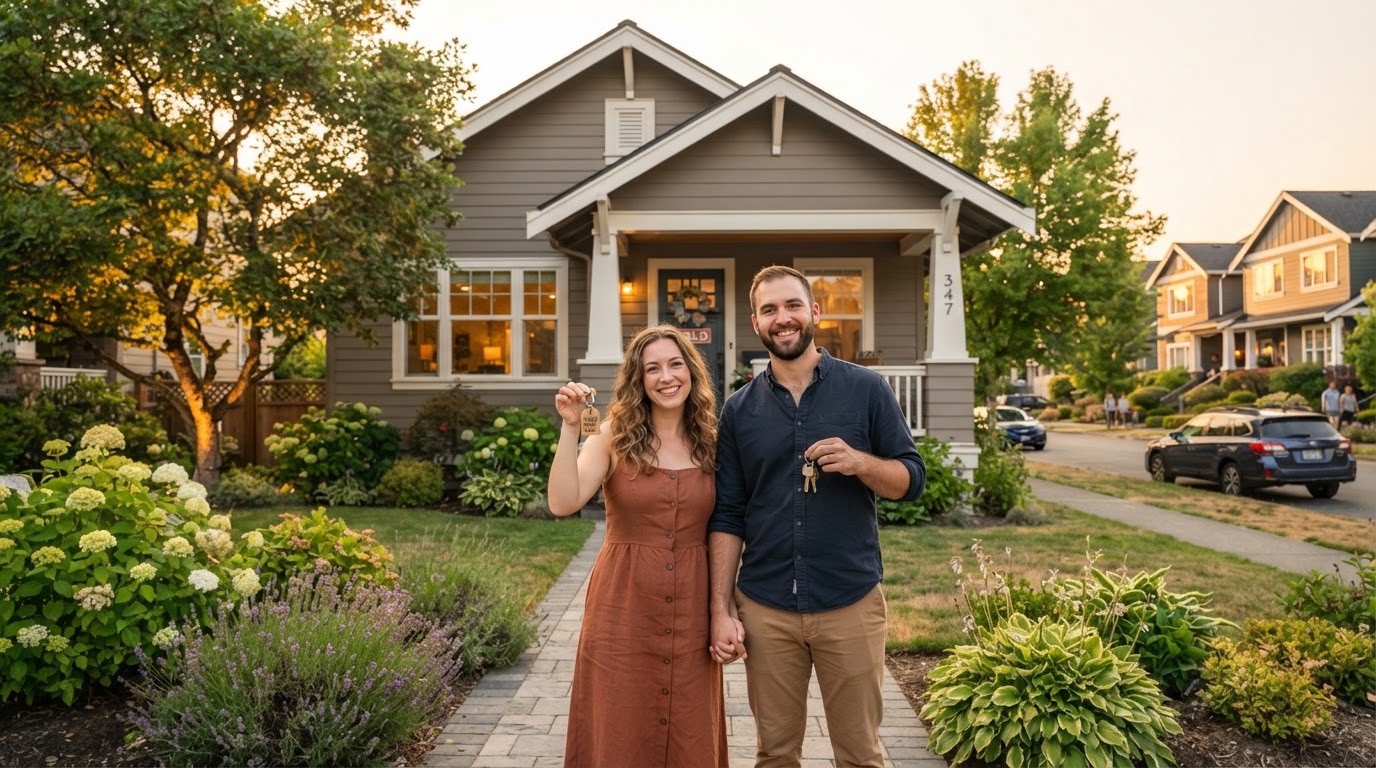
For most American families, the first home is the first real asset — the first place where a monthly payment builds equity instead of disappearing into a landlord's pocket. Yet buying that first home has never felt harder. First-time buyers made up just 21% of the market in 2025, an all-time low, and their average age climbed to a record 40 — a decade later than the historical norm. High rents, student loan debt, and childcare costs have pushed millions of families to the sidelines, watching prices rise while they save.
We're Damon Boswell and Lady Ashley Boswell, and if there's one message we preach to the families we mentor, it's this: the sidelines are the most expensive place to stand. NAR research shows that delaying homeownership from age 30 to age 40 can mean losing out on roughly $150,000 in equity on a typical starter home. That's not a rounding error — that's a generational setback. In this guide, Damon and I will walk you through the 2026 first-time buyer landscape: what's changed, what it takes to qualify, how to buy with far less cash than you think, and the Kingdom mindset that turns a house into the foundation of a legacy.
Why 2026 Is a Better Window Than 2025
Here's the honest picture of the 2026 market — and it's more hopeful than the headlines suggest. Mortgage rates are projected to ease toward 6%, a level NAR research shows could improve affordability for as many as 1.6 million renters. More inventory is entering the market as sellers return, and sellers are showing greater willingness to negotiate — something that simply didn't exist during the bidding-war years. First-time buyers have already begun responding, making up 30% of recent purchases, up from 28% a year ago.
Damon describes this moment to our mentees as 'the thaw.' The deep freeze of record-low affordability is breaking, and the buyers who prepared during the hard years — the ones who repaired their credit, saved strategically, and learned the process — are the ones positioned to move first. Lady Ashley puts it plainly: 'The market doesn't reward the people who waited for perfect conditions. It rewards the people who were ready when conditions improved.' If you've been renting and waiting, 2026 is your invitation to get ready — deliberately and on purpose.
Insight from Damon Boswell: Markets reward preparation, not prediction. You can't control rates, but you can control your credit, your savings, and your readiness. Control what you can control, and the market will meet you there.
The Credit Score That Unlocks the Front Door
Before you tour a single home, tour your credit report. Your credit score is the single biggest lever you control in the home buying process, and the difference between scores is measured in tens of thousands of dollars. A borrower with a 760 credit score recently qualified for a 6.24% mortgage rate, while a borrower with a score of 639 or lower qualified for 7.83% — a 1.59 percentage-point gap that can add thousands of dollars in interest every single year of the loan.
This is exactly why Damon built Express DIY Credit Repair. Pull all three bureau reports — Equifax, Experian, and TransUnion — at AnnualCreditReport.com, dispute any inaccuracies under the Fair Credit Reporting Act, pay every account on time, and keep your credit card utilization below 10% in the months leading up to your application. Lady Ashley tells every mentee, 'Your credit score is the price of admission to homeownership — and unlike the market, it's a price you can actually control.' Six months of disciplined credit work can be the difference between a denial and a set of keys.
- Pull all three credit reports free at AnnualCreditReport.com and review every line.
- Dispute inaccuracies under the FCRA — bureaus have 30 days to investigate.
- Aim for a 760+ score to secure the lowest available rates.
- Keep utilization below 10% and never open new accounts right before applying.
- Pay down existing debt to lower your debt-to-income ratio — lenders typically want DTI below 43%, ideally below 36%.
The Down Payment Myth: You Don't Need 20%
The single most persistent myth in housing is that you need 20% down to buy a home. You don't — and in 2026, you may need far less than you think. Conventional loans can require as little as 3% down. FHA loans require about 3.5% down with more lenient credit requirements. VA loans for eligible veterans and service members can require 0% down, and USDA guaranteed loans for eligible rural properties can also require nothing down. On a $300,000 starter home, that's the difference between $60,000 and roughly $9,000–$10,500.
Damon walks every first-time buyer through the trade-offs honestly. A lower down payment means mortgage insurance — but mortgage insurance is temporary on most conventional loans once you reach 20% equity, while the equity you build from day one is permanent. Waiting five more years to save 20% while prices and rents rise often costs more than the insurance ever will. Lady Ashley frames it the way she frames every stewardship decision: 'Run the math on both paths — waiting and buying — and let the numbers, not the fear, make the decision.'
- Conventional loans — as little as 3% down for qualified first-time buyers.
- FHA loans — about 3.5% down with more flexible credit guidelines.
- VA loans — 0% down for eligible veterans, active service members, and surviving spouses.
- USDA loans — 0% down for eligible properties in designated rural areas.
- Jumbo loans — often 10% or more down for higher-priced purchases.
- Private mortgage insurance (PMI) typically cancels once you reach 20% equity on a conventional loan.
Down Payment Assistance: The Money Most Buyers Never Claim
Here's the most underused secret in first-time home buying: there are thousands of down payment assistance programs across the country — state housing finance agencies, city grants, employer programs, and bank initiatives — and most buyers never apply because they don't know they exist. Lenders are expanding grant and assistance programs aimed squarely at first-time buyers in 2026, and the amounts are meaningful.
Bank of America, for example, offers a down payment grant of 3% of the purchase price up to $10,000, plus a homeownership grant of up to $7,500 toward closing costs or a rate buydown — total potential support of $17,500 before local programs. Chase offers the DreaMaker loan with as little as 3% down and flexible credit guidelines, plus a Homebuyer Grant of up to $5,000 in eligible neighborhoods. Stack a bank grant on top of a state housing agency program and a municipal initiative, and a family that thought it needed two more years of saving may already be ready. Damon tells every mentee: 'Before you conclude you can't afford to buy, make sure you've actually counted everything available to you.'
The most expensive money in America is the assistance families never claim because they never knew it existed. Do the research before you decide you can't. — Damon Boswell
Choose the Right Loan — and Shop Three Lenders Minimum
The traditional 30-year fixed-rate mortgage is the default, but it's not the only option — and in 2026, more buyers are looking beyond it. Adjustable-rate mortgages (ARMs), which offer lower initial rates before resetting later, have grown in popularity; about 10% of Bank of America's recent loan volume has come from ARMs, the highest share since 2023. Damon counsels that an ARM can make sense for a first-time buyer who expects to stay in the home only a short time — but a fixed rate delivers certainty that many families rightly value, especially in a market where rates are still moving.
Whatever loan type you choose, shop it. A LendingTree analysis found that borrowers save an average of roughly $80,000 over the life of a 30-year loan — about $222 a month — simply by comparing quotes from at least three lenders. Gather quotes on the same day (rates move daily), compare Loan Estimates line by line, and consider a rate lock program that lets you lock a rate for up to 90 days while you search. Lady Ashley's rule for our mentees is simple: 'Three quotes minimum. The first offer is a starting point, not a verdict.'
- 30-year fixed — predictable payments; the safest choice for long-term owners.
- ARMs — lower initial rates; sensible only if you expect to move or refinance before the reset.
- FHA — flexible credit and 3.5% down; ideal for buyers still rebuilding.
- VA and USDA — 0% down for eligible buyers; the most powerful programs if you qualify.
- Compare Loan Estimates from at least three lenders — same day, line by line.
- Ask about rate locks of up to 90 days while you house hunt.
The True Cost of Owning: Budget Beyond the Mortgage
One of the most important conversations Damon and I have with first-time buyers is about what ownership actually costs. The mortgage is the headline, but it's not the whole bill. Property taxes, homeowner's insurance, maintenance, repairs, possible HOA dues, and utilities all belong in your monthly budget before you sign anything. A disciplined rule of thumb: set aside 1% of the home's value annually for maintenance and repairs, and keep a 3–6 month emergency reserve in place before closing.
Lady Ashley coaches families to 'buy the payment, not the price.' A $300,000 home at one rate and tax level can cost hundreds more per month than the same home at another. Get pre-approved — not just pre-qualified — so you know exactly what payment fits your life, then shop below your maximum. The buyers who struggle are usually the ones who stretched to the top of their approval. The buyers who thrive bought with margin. Damon and I have watched that single discipline determine whether a first home becomes a launching pad or a burden.
Tip from Lady Ashley Boswell: Budget 1% of your home's value each year for maintenance, keep 3–6 months of reserves, and buy 10–15% below your maximum approval. Margin is what turns a house into a blessing instead of a burden.
The Process: From Preparation to Keys
Buying your first home follows a rhythm, and knowing it removes the fear. Damon walks every mentee through the same sequence. First, prepare: repair your credit, gather your down payment and assistance, and assemble documents — pay stubs, two years of tax returns, bank statements, and ID. Second, get pre-approved with a lender so sellers take your offer seriously. Third, choose a buyer's agent who knows your target market and will fight for your interests. Fourth, house hunt with your budget and your must-have list — not your emotions. Fifth, make an offer, negotiate, and go under contract. Sixth, complete the inspection and appraisal, finalize your loan, and close.
The typical contract closes in about 30 days in the current market. Along the way, never skip the inspection — it's the cheapest protection you'll ever buy — and lean on your lender and agent to explain every document before you sign. Lady Ashley reminds first-time buyers, 'You are allowed to ask questions until you understand. A professional who resents your questions is the wrong professional.' This is the largest purchase of your life; understanding it is not optional.
- Prepare: credit repair, savings, assistance applications, and documents.
- Get pre-approved — not just pre-qualified — before you tour homes.
- Choose a buyer's agent who represents you alone.
- House hunt with your budget and a written must-have list.
- Never waive the inspection — it's your cheapest protection.
- Expect roughly 30 days from contract to close in the current market.
The Kingdom Dimension: A Place to Build From
For Damon and me, homeownership is never just a financial transaction — it's a spiritual foundation. Scripture is full of the language of dwelling: God establishes the work of our hands, sets the solitary in families, and calls us to build houses and live in them. A home is a place of stability for children, hospitality for neighbors, and generosity for a community. It's hard to pour out from a place of constant transience. Ownership roots a family, and rootedness is where legacy begins.
And practically, the home is most families' first wealth engine. Every payment builds equity. Every year of appreciation compounds. The first home becomes the down payment for the first rental, which becomes the seed of the portfolios we help families build through ASAP Capital Solutions and our mentorship. Proverbs 24:27 tells us to establish our field and prepare it before building our house — order matters, preparation matters, and the house that follows preparation becomes a platform rather than a trap. That's the heart of what Damon and I teach: buy prepared, buy with margin, and let the home become the first chapter of a much bigger story.
Renting pays a landlord's mortgage. Owning pays yours. The first home isn't the end of the journey — it's the first asset in a legacy. — Damon Boswell
Your Next Step: Get Ready, Then Get Keys
If you've been renting and waiting, hear this clearly: the window is opening, and preparation is how you walk through it. Start today. Pull your credit reports and begin the repair work. Save deliberately and research every assistance program you may qualify for. Get your documents in order, connect with a lender, and get pre-approved. The families who buy in 2026 will be the ones who decided — this month — to stop waiting and start preparing.
Through Express DIY Credit Repair, ASAP Capital Solutions, and the mentorship we provide together, Damon Boswell and Lady Ashley Boswell help first-time buyers repair their credit, position for the best rates, and navigate the journey from renter to owner with strategy and confidence. If you're ready to stop renting and start owning — with a guide who's walked hundreds of families through this exact door — we'd be honored to help. Book a call and let's build your homeownership roadmap together. Because your family's name belongs on a deed, and the journey to it starts today.
Ready to Build Your Wealth Roadmap?
Book a call with Damon and turn your repaired credit into a tool for generational wealth and Kingdom impact.
Book a Call