Fix and Flip Real Estate: How to Profit From Renovation in the 2026 Market
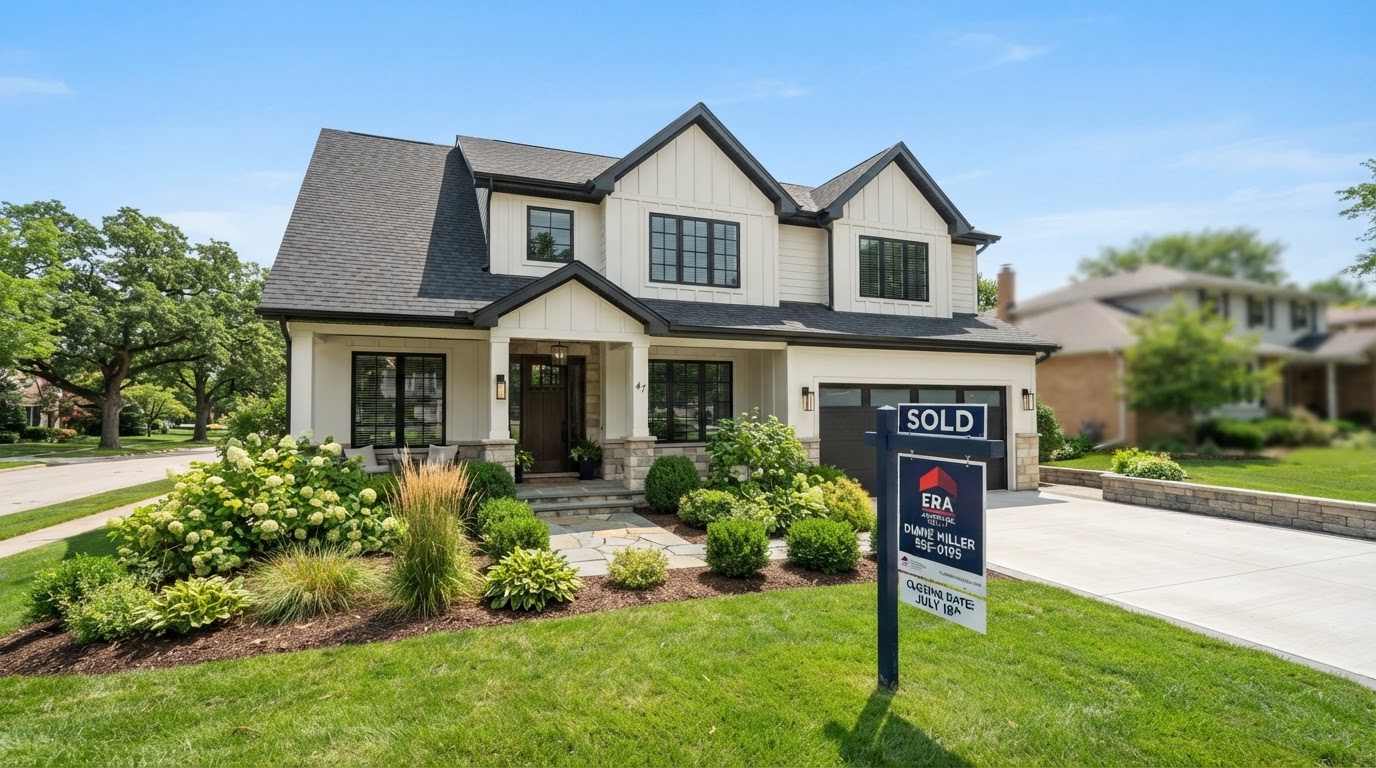
There is a strategy that allows an investor to purchase a distressed property, renovate it with disciplined precision, and resell it for a profit — sometimes in a matter of months. It's called fixing and flipping, and for decades it has been one of the most visible entry points into real estate investing. But the version of flipping that built fortunes in the mid-2010s — when rising markets handed investors appreciation almost for free — is gone. The 2026 market demands something different: discipline, honest underwriting, and a willingness to walk away from deals that don't pencil. The good news is that disciplined operators are still profiting, and the data proves it.
I'm Damon Boswell, and fix-and-flip strategy is one of the real estate disciplines I walk families through alongside my wife, Lady Ashley Boswell, in the mentorship work we do together. Too many investors approach flipping with the mindset of a television show — buy any ugly house, make it beautiful, and trust the market to deliver a windfall. That mindset is precisely why so many new flippers lose money in a market like this one. Flipping is an underwriting business first and a renovation business second. In this guide, Damon Boswell will walk you through exactly how fix-and-flip works in the 2026 market, the real profit math, the markets still producing returns, the traps that sink inexperienced flippers, and the Kingdom mindset that turns renovation into a tool for legacy.
The 2026 Data: What Flipping Actually Returns Today
Before you commit to learning this craft, you deserve honest numbers — not the inflated projections that dominate social media. According to ATTOM's Q1 2026 Home Flipping Report, 64,348 single-family homes were flipped in the first quarter of 2026, generating an average gross profit of $66,000 and a 25.4% gross return on investment. That 25.4% return was the first improvement in nearly two years and a signal that disciplined operators are finding room to profit even in a compressed market. The average time to flip a house held around 162 to 166 days, or roughly five and a half months, and approximately 63% of flips were purchased with cash.
But Damon Boswell is emphatic that gross profit is not the number that matters. Gross profit is simply the difference between the purchase price and the resale price — it ignores renovation, financing, holding, and selling costs, which typically consume 20% to 33% of a property's after-repair value. The number an investor actually takes home is net profit, and a nationwide analysis puts the median net profit for flipping a house in 2026 at roughly $15,200, or a 5.8% return on investment after all costs. That is the real number — and it is exactly why Damon tells every mentee that the market no longer produces the profit on its own. Investors who underwrite conservatively, budget honestly, and sell quickly still make money. Investors who count on a strong exit to fix a weak purchase are the ones who lose it. Lady Ashley frames it simply: 'The gross profit makes the headline; the net profit makes the family. Underwrite to the number you actually take home, not the number that looks good on paper.'
Principle from Damon Boswell: The market no longer produces the profit on its own. The Q1 2026 average gross profit is $66,000, but the median net profit after all costs is closer to $15,200. Underwrite to net, not to gross — or you'll flip your way into a loss.
Why Flipping Margins Compressed
To flip successfully in 2026, you have to understand why the margins changed, and Damon Boswell walks every mentee through the forces at work. The first force is buyer demand. In 2021, flipped listings attracted roughly 25% more page views than comparable older homes on national listing sites. By October 2025, that advantage had narrowed to just 6.5%. The reason is simple mortgage math: a buyer who purchases a flipped home is financing the cost of someone else's renovation at today's interest rates, so more buyers choose a cheaper fixer-upper and do the work themselves. Renovated homes still sell, and they still sell faster than the rest of the market — but buyers now pay for renovation only when the price fits what they can finance.
The second force is national margin compression. According to ATTOM, gross ROI fell to 23.1% in Q3 2025 — the lowest since 2008 — with median gross profit down to $60,000 from $73,554 a year earlier. National averages, however, are nearly useless for making actual investment decisions, and Damon stresses this constantly. While Phoenix flippers post single-digit returns and Austin operators barely break even, Cleveland posted a 72% gross ROI, Pittsburgh hit 106.8%, and Buffalo exceeded 109%. The flip market didn't die — it got extremely local. The investors who understand this shift are the ones who clean up while everyone else complains about margins. Lady Ashley reminds families, 'The national average is a distraction. The disciplined flipper who studies the local market — entry price, resale speed, and carrying costs — finds the deals the headlines miss.'
- Flipped listings lost most of their page-view advantage: 25% more views in 2021 down to 6.5% by October 2025.
- Flips now sell at an 8.3% median discount from peak list price, versus 2.9% for other older homes.
- Q3 2025 national gross ROI fell to 23.1% — the lowest since 2008.
- Median gross profit dropped from $73,554 to $60,000 year over year.
- Local markets vary enormously: Cleveland 72% ROI, Pittsburgh 106.8%, Buffalo 109.1%.
- The flip market got extremely local — the disciplined operator wins by studying the specific market.
The national average is a distraction. The disciplined flipper who studies entry price, resale speed, and carrying costs finds the deals the headlines miss. — Damon Boswell
The 70% Rule: The First Screen That Still Works
Before you tour a single property, Damon Boswell insists every mentee master the 70% rule. The rule says an investor should pay no more than 70% of a property's after-repair value, minus the cost of renovations. If a property will be worth $250,000 after renovation, and the renovation will cost $40,000, your maximum purchase price is 70% of $250,000 ($175,000) minus $40,000 — which is $135,000. That 30% cushion is what covers your closing costs, holding costs, selling costs, the refinance or financing process, and the inevitable surprises every renovation delivers.
The 70% rule remains a useful first screen in 2026, but Damon is clear that experienced flippers no longer treat it as complete underwriting — because the rule ignores holding time, transaction costs, and contingency, which are the three lines where thin-margin deals now fail. Any deal that passes the 70% screen should still go through the full net profit math before an offer is made. The investors who get burned are the ones who treat the 70% rule as the whole answer rather than the first question. Lady Ashley tells families, 'The 70% rule gets you into the right conversation. The net profit math gets you to the right offer. Use both, in order, every single time.'
Insight from Damon Boswell: The 70% rule is a screen, not underwriting. It ignores holding time, transaction costs, and contingency — the three lines where thin-margin deals now fail. Always run the full net profit math before making an offer.
Underwrite an ARV You Can Defend
Every flip depends on the after-repair value, or ARV — the price the finished property can realistically sell for. Damon Boswell teaches mentees that ARV is not aspirational; it's defensible. It requires careful comparable selection. The highest sale in the neighborhood should never be treated as the baseline unless your finished project will match that comp's design, finishes, condition, and buyer appeal. If your finished property will not compete with that comp, you should not underwrite to that price. Experienced flippers set ARV in the middle or lower end of the comp range, never at the top, and they model the exit with room for a price reduction, a buyer closing-cost credit, and a longer holding period than planned.
If a deal only works at the highest comp and a perfect resale, the margin is too thin. Damon coaches mentees to pressure-test every deal before buying it: assume the resale comes in 3–5% below your ARV, assume the renovation runs 10% over budget, and assume the property sits on the market 30 days longer than expected. If the deal still produces a profit under those conservative assumptions, it's worth pursuing. If it only works under the best case, walk away. Lady Ashley frames the discipline: 'Hope is not a strategy and optimism is not an offer. Underwrite the deal you can defend, and the resale takes care of itself.'
- ARV must be defensible — never underwrite to the highest comp unless your finished project matches it.
- Set ARV in the middle or lower end of the comp range, never at the top.
- Model the exit with room for a price reduction, buyer credits, and a longer holding period.
- Pressure-test: assume resale 3–5% below ARV, renovation 10% over budget, and 30 extra days on market.
- If the deal only works at the best case, walk away — the margin is too thin.
- Underwrite the deal you can defend, and the resale takes care of itself.
Hope is not a strategy and optimism is not an offer. Underwrite the deal you can defend, and the resale takes care of itself. — Lady Ashley Boswell
Make Profit a Required Line Item
The single discipline that separates profitable flippers from break-even ones is this: successful flippers do not treat profit as whatever is left after closing. They build the required profit into the offer price before the deal is ever purchased. Damon Boswell teaches mentees to work backward from a defensible ARV, subtracting selling costs, holding costs, the rehab budget, a contingency reserve, and a required profit — and the number that remains is the maximum purchase price. The investor who refuses to exceed that number, no matter how appealing the property, is the investor who stays profitable.
Experienced flippers typically set a profit floor before making an offer. Some target a profit roughly equal to the renovation budget, so the reward matches the size and risk of the project. Others require a minimum return of about 15% on the total cash invested. That profit floor should adjust to the risk of the deal. A simple renovation in a proven submarket may support a tighter margin because the investor has more confidence in the resale price, buyer demand, and construction scope. A wider margin is needed when the deal has more moving parts — an unusual layout, weaker location, limited comp support, heavy renovation scope, or uncertain resale price. Damon tells every mentee that many flip losses come from ignoring the purchase limit, often because the investor gets pulled into a bidding war or buys a marginal deal just to keep a crew busy. Lady Ashley frames it: 'Discipline at the offer is what protects discipline at the renovation. The profit is decided before you ever swing a hammer — at the purchase price.'
Principle from Damon Boswell: Build profit into the offer, don't hope for it at the close. Work backward from a defensible ARV, subtract every cost plus a required profit, and never exceed the maximum purchase price that remains.
Where It Is Still Profitable to Flip in 2026
National flipping data can make the market look more uniform than it really is, and Damon Boswell refuses to let any mentee make a decision on a national average. Margins improved nationally in Q1 2026, but the spread between markets remains enormous. Lower-priced metros such as Pittsburgh and Buffalo posted high gross flip margins, affordable Midwest and Southern markets continued to support workable returns, and several major Texas metros ran much closer to break-even. Two variables explain much of the difference, and Damon walks mentees through both.
The first is resale speed. Homes in Indianapolis sell in about 28 days on average, while San Antonio runs closer to 73 days. On a $300,000 hard money loan at 10%, each extra week on market adds roughly $575 in interest before taxes, insurance, utilities, and other carrying costs. The second is fixed carrying cost. Annual homeowners insurance averages about $7,136 in Florida compared with roughly $1,700 in western New York — meaning the same gross spread can produce very different net profits depending on where the property sits. The Q1 2026 national sweet spot was the $100,000 to $200,000 purchase range, where a renovation can move a house up the price ladder without pushing it beyond what local buyers can afford. Damon tells mentees: don't chase another metro every time the national data changes. Study the entry price relative to the local median, the speed at which renovated homes resell, and the fixed costs that accrue while the property waits for a buyer. Lady Ashley frames the takeaway: 'Profit lives in the local numbers. The flipper who knows one market cold beats the flipper who chases ten markets loosely.'
- Lower-priced metros like Pittsburgh and Buffalo posted high gross flip margins in 2026.
- Affordable Midwest and Southern markets continued to support workable returns.
- Resale speed matters: Indianapolis averages 28 days on market versus 73 in San Antonio.
- Each extra week on a $300,000 hard money loan at 10% adds roughly $575 in interest.
- Florida insurance averages $7,136/year versus $1,700 in western New York.
- The national sweet spot is the $100,000–$200,000 purchase range.
Profit lives in the local numbers. The flipper who knows one market cold beats the flipper who chases ten markets loosely. — Damon Boswell
The Fix-to-Rent Exit: Flipping's Backup Plan
One of the most important strategic shifts in the 2026 market is the rise of the fix-to-rent exit — and Damon Boswell considers it essential risk management for every flipper. In a recent survey, 75% of active flippers expected strong buyer demand over the next 12 months, and just over half planned to convert some projects into rentals as a second exit strategy. The fix-to-rent path is a variation of the BRRRR method we covered in an earlier guide: instead of selling the renovated property, the investor refinances the hard money loan into long-term financing, places a tenant, and holds the property as a cash-flowing rental.
The fix-to-rent exit is powerful precisely because it removes the single biggest risk in flipping — the dependence on a fast resale at the target price. If the market softens during your renovation, or the appraisal comes in lower than projected, the fix-to-rent investor still has a viable outcome: refinance based on the new appraised value, place a tenant, and let the rent cover the debt while the market recovers. Damon coaches mentees to underwrite every flip with the question, 'Does this deal work as a rental if I can't sell it?' If the answer is yes, the investor has two exits instead of one — and two exits dramatically reduce the risk of a forced sale at a loss. Lady Ashley frames it: 'The disciplined flipper always has a second door. Sell if the market rewards you; rent if it doesn't. Either way, you never have to give the property away.'
Insight from Damon Boswell: The fix-to-rent exit removes the single biggest risk in flipping — dependence on a fast resale. Underwrite every flip so it works as a rental if you can't sell it, and you'll always have a second door.
The Risks Every Flipper Must Understand
For all its potential, fix-and-flip carries real risks, and Damon Boswell refuses to teach the strategy without teaching the dangers. The first risk is ARV risk — if the post-renovation appraisal or resale comes in lower than projected, the profit evaporates and the deal may sell at a loss. The second is renovation risk — contractors who run over budget, over timeline, or deliver substandard work can erode the entire margin. The third is holding-cost risk — every extra week on the market burns interest, insurance, taxes, and utilities, and a property that sits unsold for three extra months can turn a profitable flip into a break-even one. The fourth is financing risk — hard money loans carry high interest rates and short terms, and a flip that drags past the loan term forces a refinance or extension at unfavorable terms.
Damon teaches families to mitigate every one of these risks. Underwrite a defensible ARV in the middle of the comp range, not the top. Add 15–20% to every renovation budget as contingency. Build renovation buffers into your contractor payment schedule — never pay everything upfront. Maintain reserves equal to three months of carrying costs. And most importantly, build the fix-to-rent exit into every deal so you're never forced into a bad sale. Lady Ashley adds the stewardship lens: 'Flipping rewards the disciplined and punishes the hopeful. The same leverage that builds a profit can sink a family if the math isn't respected. Protect your capital like it's the only money you'll ever have — because for the deal in front of you, it is.'
- ARV risk: a low post-renovation resale or appraisal erases the profit.
- Renovation risk: contractors over budget or over timeline erode the margin.
- Holding-cost risk: extra weeks on market burn interest, insurance, taxes, and utilities.
- Financing risk: hard money loans carry high rates and short terms.
- Mitigate with defensible ARV, 15–20% contingency, staged contractor payments, and reserves.
- Always build the fix-to-rent exit so you're never forced into a bad sale.
Flipping rewards the disciplined and punishes the hopeful. The same leverage that builds a profit can sink a family if the math isn't respected. — Lady Ashley Boswell
Fix and Flip Within a Complete Wealth Strategy
Damon Boswell never teaches fix-and-flip as a standalone destination, because it's one pillar of a complete wealth architecture — not the whole building. Flipping is an active, transactional income strategy. It generates capital quickly when executed well, but it stops paying the moment you stop working deals. That's why Damon positions it alongside the other tools we teach: credit repair to position for funding, business credit to build a fundable company, buy-and-hold rentals for passive cash flow, the BRRRR method for capital recycling, and passive syndications for hands-off diversification. Each pillar serves a different purpose, and the strongest portfolios combine several.
For most families, Damon recommends flipping as an active-income engine for a season — a way to generate the capital that funds the passive portfolio that follows. The family that flips for two years, banks the net profits, and deploys them into cash-flowing rentals transitions from transactional income to passive income, and that's where true wealth begins to compound. Lady Ashley frames the sequence beautifully: 'Flipping builds the seed capital. Rentals convert it into passive cash flow. Passive strategies preserve and multiply it. A wise family uses each strategy in its proper season — and never mistakes the active engine for the passive destination.' That's the architecture Damon Boswell has helped countless families build, and fix-and-flip is a powerful tool within it.
Principle from Damon Boswell: Flipping is an active-income engine for a season — not a destination. Use the net profits to fund the passive rentals that follow, and never mistake the active engine for the passive destination.
The Kingdom Dimension: Stewardship of Labor and Land
For Lady Ashley and me, fix-and-flip is ultimately a stewardship conversation. Flipping, at its best, is the financial expression of disciplined labor applied to neglected land — taking a property that has fallen into disrepair, restoring it through hard work and wise capital, and returning it to the community as quality housing. That's not just a transaction; it's a form of stewardship. The Parable of the Talents in Matthew 25 commends the servants who multiplied what was entrusted to them through effort and initiative. A well-executed flip takes a neglected asset, improves it, and returns it to the market more valuable and more useful than it was found. Damon Boswell teaches every family that the goal was never to flip the most houses. The goal is to be found faithful with the capital, the labor, and the land entrusted to our hands.
When a family flips with integrity — buying at honest prices, renovating with quality workmanship, selling at fair value, and always preserving the fix-to-rent exit to avoid a forced loss — they're participating in the stewardship of a community. The property they restore becomes a home for a family. The renovation creates work for contractors and tradespeople. The transaction returns a neglected property to productive use. And the profit, stewarded wisely, becomes the seed capital for the rentals, the businesses, and the ministries that follow. Damon and Lady Ashley teach every family that Proverbs 14:23 tells us in all toil there is profit. The toil of a well-executed flip — the analysis, the renovation, the discipline of the offer — produces profit that compounds into a family's future. The hand of the diligent makes rich, and flipping, done with discipline and integrity, is one of the ways a family turns diligence into legacy.
Flipping, at its best, is disciplined labor applied to neglected land — restoring a property and returning it to the community as quality housing. That's stewardship, not just a transaction. — Damon Boswell
Your Next Step: Build Your First Flip With Discipline
If you've been watching the real estate market, wondering whether flipping still works in 2026, the honest answer is yes — but only for the investor willing to treat it as an underwriting business. Start by repairing your credit, because every flip's financing depends on a strong credit profile. Build your reserves. Study the 70% rule and the net profit math until they're second nature. Learn to underwrite a defensible ARV in the middle of the comp range, never the top. Choose a market you can study cold — entry price, resale speed, and carrying costs. Build relationships with a reliable contractor and a lender who understands fix-and-flip financing. And build the fix-to-rent exit into every deal, so you always have a second door.
If you're ready to build your first flip with discipline — to coordinate your credit, your capital, and your real estate strategy into one underwritten plan — Lady Ashley Boswell and Damon Boswell would be honored to help. Through Express DIY Credit Repair, ASAP Capital Solutions, and the mentorship we provide together, Damon Boswell helps families position for their first flip, structure the financing wisely, and build a strategy that generates capital today and a legacy for tomorrow. Book a call and let's build your real estate roadmap together. Because the capital God entrusted to you deserves to be multiplied — and fix-and-flip, executed with discipline and integrity, is one of the ways a family turns neglected land into a foundation that serves people for generations to come.
Ready to Build Your Wealth Roadmap?
Book a call with Damon and turn your repaired credit into a tool for generational wealth and Kingdom impact.
Book a Call