The Great Wealth Transfer: Is Your Family Ready for the Largest Inheritance in History?
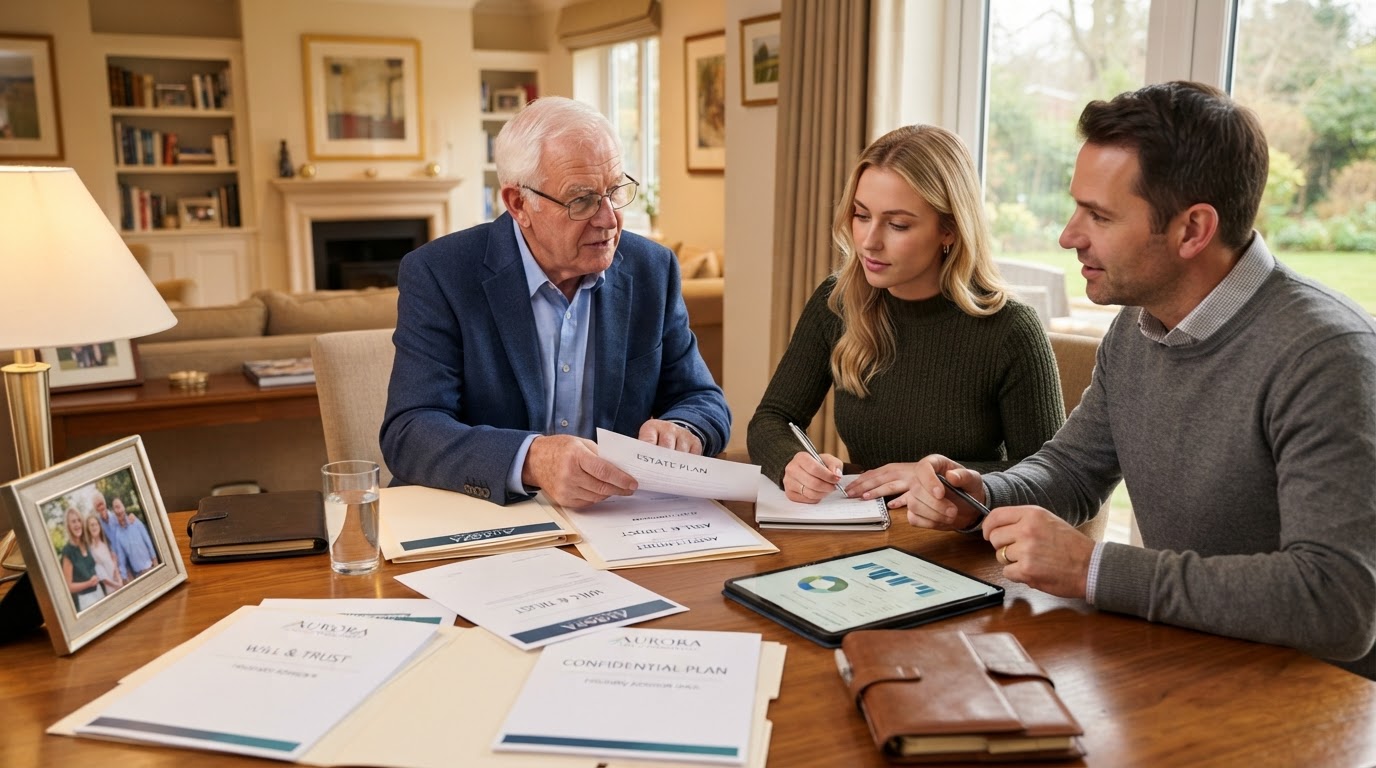
There is a wealth transfer underway in America unlike anything in human history, and the numbers are staggering. According to Cerulli Associates, an estimated $124 trillion in wealth will transfer through 2048 — from Baby Boomers and the Silent Generation to younger generations and to charity. Nearly $100 trillion of that total will come from Boomer and older households, representing about 81% of all transfers. Of the amount going to heirs, roughly $105 trillion, Millennials are projected to inherit the most of any generation over the full 25-year window — about $46 trillion — with Gen X inheriting approximately $39 trillion and Gen Z about $15 trillion. Heirs are already inheriting around $2.5 trillion a year, a figure Cerulli projects will top $4 trillion annually by around 2036. This is not a future event. It is happening now, and the families who are prepared will steward it well. The families who are not — and most are not — will lose it.
I'm Damon Boswell, and alongside my wife, Lady Ashley Boswell, I mentor families on both sides of the wealth transfer — the generation building and giving, and the generation receiving and stewarding. Through Damon's work across wealth strategy and the mentorship we provide together, we have watched inheritances arrive like a flood and evaporate within years, because the heirs were never prepared and the givers never planned. In this guide, Damon Boswell will walk you through what the Great Wealth Transfer actually is, the staggering statistics behind it, why most families are unprepared, what heirs must know to steward an inheritance well, and the Kingdom mindset that treats inherited wealth as a stewardship responsibility, not a windfall.
The Scale: $124 Trillion and Counting
Let's start with the scale, because the numbers reshape how we understand what is coming. Cerulli's projection of $124 trillion transferring through 2048 replaced an earlier, widely cited estimate of about $84 trillion — the figure was revised upward as rising home values and stock prices expanded the asset base. The updated estimate reflects the reality that American wealth has grown faster than earlier projections anticipated. Nearly $100 trillion — about 81% of all transfers — will come from Boomer and older households. Of the total, roughly $105 trillion is expected to go to heirs and about $18 trillion to charity. The wealth is heavily concentrated: high-net-worth and ultra-high-net-worth households, which together make up only about 2% of all households, account for more than half of the total transfer — roughly $62 trillion.
What this means for the typical family is both encouraging and sobering. Encouraging, because surveys show that about 68% of Millennials and Gen Z have received or expect an inheritance averaging nearly $320,000. Sobering, because only about 1 in 5 households actually receives an inheritance, and the wealth is heavily concentrated at the top — meaning the averages are pulled up by a small number of very large transfers. Damon teaches every family that the Great Wealth Transfer is not a guarantee; it is an opportunity, and the families who prepare — on both the giving and the receiving side — are the ones who capture it. Lady Ashley frames it: 'The Great Wealth Transfer is not coming — it is here. The question is not whether your family will receive it, but whether your family will keep it. Preparation, not the transfer itself, is what determines the outcome.'
Principle from Damon Boswell: The Great Wealth Transfer is not a guarantee — it is an opportunity. $124 trillion is moving, but the families who keep what they receive are the families who prepared before it arrived. Preparation, not the transfer, is what determines the outcome.
The Generational Breakdown: Who Gives, Who Receives
The transfer flows from the oldest generations to the youngest, but the timing and the amounts differ by generation in ways that matter for planning. Baby Boomers, born between 1946 and 1964, are both the largest givers and, interestingly, recipients of about $6 trillion from the generation before them. Gen X, born 1965 to 1980, is estimated to inherit approximately $39 trillion and stands to inherit the greatest portion of assets in the next 10 years — about $14 trillion — as the oldest Boomers pass. Millennials, born 1981 to 1996, are projected to inherit the most of any generation over the full 25-year window, about $46 trillion, though roughly $8 trillion of that comes in the next decade. Gen Z, born 1997 or later, is estimated to inherit about $15 trillion, further down the timeline.
Damon teaches every family to think about the transfer in two dimensions: the giving side and the receiving side. For the giving generation — primarily Boomers and the Silent Generation — the work is estate planning: trusts, beneficiary designations, tax strategy, and the family conversations that prepare heirs. For the receiving generation — primarily Gen X and Millennials — the work is financial literacy, stewardship readiness, and the discipline to preserve rather than consume. Cerulli's data shows that nearly $40 trillion of spousal transfers will go to widowed women in the Boomer and older generations, creating a massive need for planning that addresses longevity, widowhood, and the management of assets by a surviving spouse who may not have been the primary financial decision-maker. Lady Ashley frames it: 'The transfer has two sides, and both require work. The givers must plan. The receivers must prepare. The family that does both keeps the wealth. The family that does neither loses it — usually within a generation.'
- Baby Boomers (1946–1964): the primary givers; also inherit ~$6 trillion from prior generation.
- Gen X (1965–1980): inherit ~$39 trillion; ~$14 trillion in the next 10 years.
- Millennials (1981–1996): inherit ~$46 trillion over 25 years — the most of any generation.
- Gen Z (1997+): inherit ~$15 trillion, later in the timeline.
- ~$40 trillion in spousal transfers will go to widowed women in Boomer and older generations.
- High-net-worth households (2% of all) account for ~$62 trillion — over half the total.
The transfer has two sides, and both require work. The givers must plan. The receivers must prepare. The family that does both keeps the wealth. The family that does neither loses it — usually within a generation. — Damon Boswell
The Unpreparedness Crisis: Why 56% Have No Plan
The sobering reality behind the Great Wealth Transfer is that the families receiving it are, by and large, not prepared to steward it. The Trust & Will 2026 report found that 56% of U.S. adults have no estate planning documents whatsoever — no will, no trust, no power of attorney. Only 26% have a will, down five points in a single year and the lowest rate since tracking began. Just 14% have a trust. Meanwhile, 73% of Americans say estate planning is personally important to them — a glaring gap between belief and action. And 42% of all Americans say they would not know what to do if a family member died today, a figure that rises to 56% among those with no estate plan and falls to just 18–19% among will- and trust-holders.
The consequences of this unpreparedness compound across the transfer. A Boomer parent with $800,000 in assets and no estate plan leaves their Millennial child an inheritance that passes through probate — costing 3% to 7% ($24,000 to $56,000), taking a year or more, and becoming public record. A Gen X inheritor with no financial literacy receives $200,000 and, statistics suggest, spends a significant portion of it within two years rather than investing or preserving it. Citizens Bank's research found that 32% of Americans say they have received bad financial advice after coming into a large amount of money — and that figure is highest among the very generations receiving the transfer: 51% of Gen Z and 54% of Millennials. The transfer is moving wealth from a generation that planned to a generation that has not, and the gap between the two is where wealth evaporates. Lady Ashley frames it: 'The crisis is not the transfer. The crisis is the preparation gap. Wealth is moving from families that built it to families that were never taught to keep it — and that gap is where the $124 trillion quietly disappears.'
Insight from Damon Boswell: 56% of Americans have no estate plan, and 42% would not know what to do if a family member died today. The Great Wealth Transfer is moving wealth from families that planned to families that were never taught to keep it — and that gap is where $124 trillion quietly disappears.
For the Givers: Planning the Transfer Well
For the generation giving the wealth — primarily Boomers and the Silent Generation — the work is estate planning, and it is the most important stewardship act of the transfer. The first step is a documented estate plan: a will at minimum, a revocable living trust for families with a home or meaningful assets, durable powers of attorney for financial and medical decisions, and updated beneficiary designations on every retirement account, life insurance policy, and payable-on-death account. The second step is tax strategy: understanding the estate tax exemption, using annual gift exclusions to transfer wealth during life, and leveraging trusts to minimize the tax drag at each generational handoff. The third step — and the one most families skip — is the family conversation: telling your heirs what they will receive, when, and under what conditions, so they are prepared rather than surprised.
Damon coaches giving families through each step. The estate plan ensures the wealth transfers efficiently, privately, and with minimal tax. The tax strategy keeps more wealth in the family and less in the government's hands. But the family conversation is what preserves the wealth across generations — because an heir who knows the plan, understands the assets, and has been prepared to steward them is an heir who keeps the wealth. Cerulli's data shows that about 50% of the overall transfer volume — roughly $62 trillion — is expected to come from high-net-worth and ultra-high-net-worth households, just 2% of all households. For these families, the planning is not optional; the scale of the transfer demands structures, trusts, and professional guidance that only preparation can provide. Lady Ashley frames it: 'The giving generation's job is not just to leave wealth — it is to leave heirs who can keep it. The estate plan transfers the assets. The family conversation transfers the capacity. Both are required, and the second is the one most families neglect.'
- Establish a documented estate plan — will, living trust, powers of attorney, beneficiary designations.
- Implement tax strategy — gift exclusions, trusts, and structures that minimize transfer tax.
- Have the family conversation — tell heirs what they will receive, when, and under what conditions.
- Prepare heirs financially — teach the assets, the structures, and the stewardship before they inherit.
- Use trusts to control distribution — protect heirs from receiving too much, too fast, too young.
The giving generation's job is not just to leave wealth — it is to leave heirs who can keep it. The estate plan transfers the assets. The family conversation transfers the capacity. — Lady Ashley Boswell
For the Receivers: Stewarding an Inheritance Well
For the generation receiving the wealth — primarily Gen X and Millennials — the work is stewardship, and it is the difference between keeping the inheritance and losing it within a generation. The first discipline is financial literacy: understanding the assets you will inherit — the retirement accounts, the real estate, the investments, the business interests — well enough to make informed decisions about them. The second discipline is patience: resisting the urge to treat an inheritance as a windfall to be spent, and instead treating it as capital to be stewarded, invested, and preserved. The third discipline is professional guidance: working with a financial advisor, a CPA, and an estate attorney who can help you understand the tax implications, the distribution structure, and the long-term strategy for the assets you receive.
Damon teaches receivers that the statistics on inherited wealth are sobering, and they should be. Studies have long suggested that roughly 70% of family wealth is lost by the end of the second generation and 90% by the third — not because the transfer was too small, but because the heirs were never prepared to steward it. Citizens Bank's research found that 55% of Millennials expect to inherit wealth within five years, yet 32% of Americans — and over half of Gen Z and Millennials — say they have received bad financial advice after coming into a large amount of money. The family that inherits without preparation consumes. The family that inherits with preparation compounds. The difference is not the amount inherited; it is the readiness of the heir. Lady Ashley frames it: 'An inheritance is not a gift to be spent. It is a trust to be stewarded. The heir who understands that builds on it. The heir who does not buries it. The preparation is what makes the difference — and the preparation is your responsibility, not your parents'.'
Tip from Damon Boswell: Roughly 70% of family wealth is lost by the second generation — not because the transfer was too small, but because the heirs were never prepared. An inheritance is not a gift to be spent. It is a trust to be stewarded. The preparation is what makes the difference.
The Concentration Reality: What the Averages Hide
It is essential to be honest about the concentration of the wealth transfer, because the averages can be misleading. Cerulli's data shows that more than 50% of the overall transfer volume — roughly $62 trillion — is expected to come from high-net-worth and ultra-high-net-worth households, which together make up only about 2% of all households. The remaining transfer is distributed across the broader population, with the majority of families receiving smaller inheritances or none at all. Surveys show that about 68% of Millennials and Gen Z have received or expect an inheritance averaging nearly $320,000 — but only about 1 in 5 households actually receives one, and the figures are heavily skewed by the largest transfers at the top.
What this means for the typical family is that the Great Wealth Transfer is real, but it is uneven — and the preparation gap is even more important for the families receiving modest inheritances, because a smaller inheritance has less room for error. A $100,000 inheritance, poorly stewarded, is gone in two years. The same $100,000, invested at 8% and left to compound, becomes $466,000 in 20 years and over $1 million in 30. The discipline of stewardship applies at every scale, and the family that learns it — whether the inheritance is $50,000 or $5 million — is the family that builds on what they receive rather than spending what they were given. Damon teaches every receiver the same principle: the amount matters less than the discipline. The wealthy family is not the one that receives the most; it is the one that stewards what it receives. Lady Ashley frames it: 'The averages hide the truth: most families receive a little, and a few receive a lot. But the principle is the same for both — steward it, and it grows. Spend it, and it is gone. The discipline, not the dollar amount, is what builds the legacy.'
The Kingdom Dimension: Inheritance as Stewardship
For Damon and Lady Ashley, the Great Wealth Transfer is ultimately a stewardship story, and the scriptures frame it with striking clarity. Proverbs 13:22 tells us a good man leaves an inheritance to his children's children — the multi-generational vision at the heart of legacy. But the parable of the talents in Matthew 25 adds the warning: the servant who buried what was entrusted to him, rather than stewarding and multiplying it, was called wicked and lazy. An inheritance is not a reward to be consumed; it is a trust to be stewarded, multiplied, and passed on. The generation that receives it without multiplying it has missed the assignment, regardless of how much they received.
Damon teaches that the Great Wealth Transfer is, for the Kingdom-minded family, an unprecedented opportunity — not just to preserve wealth, but to deploy it for purposes bigger than consumption. An inheritance stewarded well funds ministries, buys homes for the next generation, creates businesses that employ families, and builds the structures that carry a family's faith and values forward. The $124 trillion transferring through 2048 is, for the families who steward it, the resources for a generation of Kingdom impact — if the givers plan and the receivers prepare. Lady Ashley frames it: 'The Great Wealth Transfer is not a wealth event. It is a stewardship test. The families who pass it — the givers who plan and the receivers who prepare — become the faithful servants who multiply what was entrusted to them. The families who fail it bury it. And the test is already underway.' That is the heart of what Damon Boswell teaches every family we mentor: that the transfer is here, the preparation is the assignment, and the stewardship is the legacy.
The Great Wealth Transfer is not a wealth event. It is a stewardship test. The families who pass it — givers who plan and receivers who prepare — become the faithful servants who multiply what was entrusted to them. — Damon Boswell
Your Next Step: Prepare for the Transfer
Whether your family is on the giving side or the receiving side of the Great Wealth Transfer — and most families are on both, across generations — the work is preparation, and the time to begin is now. If you are in the giving generation, establish your estate plan, implement the tax strategy, and have the family conversation that prepares your heirs. If you are in the receiving generation, build your financial literacy, find the professional guidance, and develop the discipline that treats an inheritance as a trust to be stewarded rather than a windfall to be spent. The $124 trillion is moving — the only question is whether your family will keep what it receives, and that question is answered by the preparation you do today.
If you are ready to prepare your family for the Great Wealth Transfer — to coordinate your estate plan, your trusts, your real estate, your business, and your family's financial literacy into one stewardship strategy — Damon Boswell and Lady Ashley Boswell would be honored to help. Through Express DIY Credit Repair, ASAP Capital Solutions, and the mentorship we provide together, Damon Boswell helps giving families plan their legacy and receiving families prepare to steward it well. Book a call and let's build your transfer roadmap together. Because the largest wealth transfer in history is already underway — and the family that prepares is the family that keeps it.
Ready to Build Your Wealth Roadmap?
Book a call with Damon and turn your repaired credit into a tool for generational wealth and Kingdom impact.
Book a Call