High-Yield Savings and Emergency Funds in 2026: How to Build the Reserve That Holds Your Wealth Together
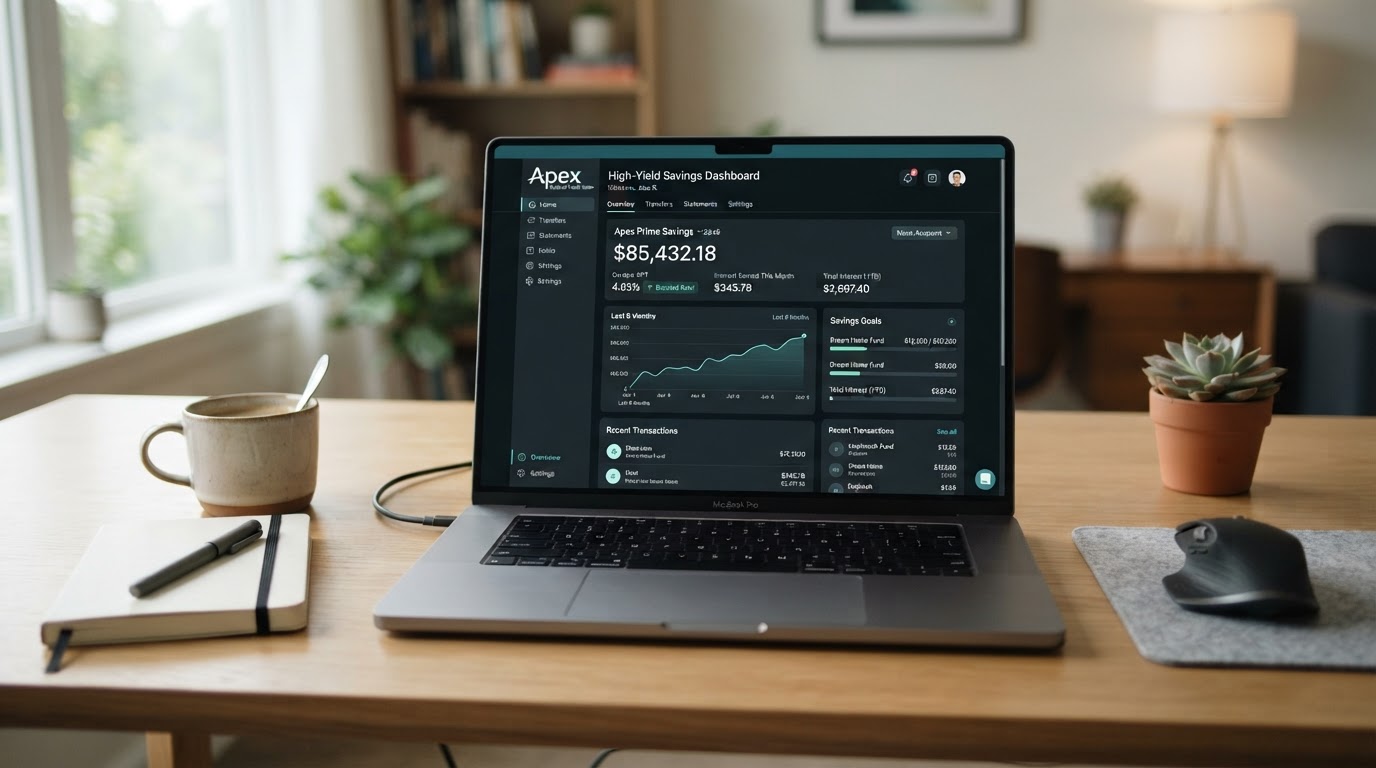
There is an asset that almost no one talks about at the dinner table, that no financial influencer goes viral for, and that quietly holds more wealth plans together than any other single tool. It is the emergency fund — the liquid reserve that sits between a family and the disasters that would otherwise force them to sell investments at a loss, take on high-interest debt, or abandon a long-term strategy for a short-term survival move. In 2026, with top high-yield savings accounts earning up to 4.25% APY, that reserve is not just a safety net. It is a strategic asset, and the families Damon Boswell mentors treat it as the foundation of their entire wealth architecture.
I'm Damon Boswell, and alongside my wife, Lady Ashley Boswell, I mentor families through the full architecture of wealth — credit, funding, real estate, taxes, and the reserves that hold it all together when life happens. An emergency fund is not glamorous. It is not exciting. It is the single most important discipline a family can build, because it is the reserve that lets every other strategy survive the moment the car breaks down, the roof leaks, the job changes, or the market pulls back. In this guide, Damon Boswell will walk you through how to size an emergency fund, where to hold it in the 2026 rate environment, how to structure it alongside your other reserves, and the Kingdom mindset that treats liquidity not as idle cash but as the stewardship that keeps a family solvent through every season.
The 2026 Rate Environment: What You Can Actually Earn
Let us start with the numbers, because the numbers are what make a high-yield savings account worth the discipline. As of October 2026, the top high-yield savings accounts are offering APYs up to 4.25%, with competitive accounts from Forbright Bank, Abound Credit Union, and others earning between 4.00% and 4.25%. Major online banks like SoFi offer up to 4.20% APY with no minimum balance, Synchrony Bank offers 3.80%, and Discover offers 3.40%. Even traditional names like American Express and Ally Bank offer 3.00% to 3.60% APY — rates that, while below the top of the market, still meaningfully out-earn a traditional checking account that pays effectively nothing.
What those rates mean in practice is this: a family that holds a $50,000 emergency fund in a high-yield account at 4.25% earns roughly $2,125 per year in interest — money that compounds while the principal sits ready for the moment it is needed. The same $50,000 in a traditional checking account earns nothing, which means the family is quietly losing purchasing power to inflation every year while gaining nothing in return. Damon teaches every mentee that the first move of a wealth builder is not to invest. It is to move idle cash into a high-yield account where it earns while it waits, because the interest is real money and the liquidity is real protection. Lady Ashley frames it: 'Cash in a checking account is dead weight. Cash in a high-yield account is a reserve that earns its keep while it waits for the moment you need it. Move the money, and let it work.'
Principle from Damon Boswell: The first move of a wealth builder is not to invest. It is to move idle cash into a high-yield account where it earns while it waits — because the interest is real money and the liquidity is real protection.
How to Size an Emergency Fund
The standard Damon sets for the families he mentors is a tiered reserve, and the sizing depends on the stability of the household's income and the complexity of their financial life. The baseline is three to six months of essential living expenses — not income, but expenses — held in fully liquid, FDIC-insured high-yield savings. For a household with a single W-2 income and stable employment, six months is the floor. For a household with two incomes in different industries, three to four months may be sufficient. For a self-employed business owner or a commission earner whose income fluctuates, Damon recommends nine to twelve months, because the variability of the income means the reserve must cover not just a job loss but a slow-paying client cycle or a down quarter.
The discipline is to calculate the number honestly — the real monthly burn rate, including the mortgage or rent, utilities, food, insurance, transportation, minimum debt payments, and any obligations that cannot be paused — and then multiply it by the months of reserve your income stability requires. The most common mistake Damon sees is the family that sizes the reserve to their income rather than their expenses, which inflates the target and makes it feel unreachable, or the family that sizes it to their expenses but excludes the irregular costs — property taxes, insurance premiums, annual registrations — that arrive like surprises and drain the reserve they thought was adequate. 'Size the reserve to the real burn rate,' Damon tells every mentee, 'and the reserve will hold when life happens. Size it to the optimistic number, and the reserve will fail the first time reality arrives.'
- Baseline: 3–6 months of essential living expenses in FDIC-insured high-yield savings.
- Single W-2 income, stable employment: 6 months minimum.
- Two incomes in different industries: 3–4 months may suffice.
- Self-employed or commission income: 9–12 months, due to income variability.
- Size to the real monthly burn rate — including irregular costs like property taxes and insurance premiums.
- Do not size to income — size to expenses, or the target becomes unreachable and the reserve never gets built.
Where to Hold the Reserve in 2026
Not all savings accounts are created equal, and the 2026 rate environment rewards the family that shops with intention. The top of the market — accounts earning 4.00% to 4.25% APY — is dominated by online banks and credit unions that pass their lower overhead to depositors in the form of higher rates. Forbright Bank, Abound Credit Union, Newtek Bank, and Western Alliance Bank all offer rates at or near 4.25% with no monthly fees and no minimum balance requirements. SoFi offers up to 4.20% APY with a connected checking account and the ability to organize savings into named 'vaults' for different goals. The key selection criteria Damon teaches are simple: FDIC insurance, no monthly maintenance fees, no minimum balance requirements that would erode the rate, and easy access when the funds are needed.
Damon coaches every mentee to avoid two common traps. The first is the traditional brick-and-mortar bank that pays 0.01% APY — the account that earns nothing while inflation quietly erodes the purchasing power of the reserve. The second is the account with a promotional rate that drops sharply after an introductory period, leaving the family with a reserve earning a fraction of what they expected. The discipline is to choose an account with a stable, competitive ongoing rate, FDIC insurance, and no fees that erode the balance — and to review the rate annually, because the competitive landscape shifts and the account that was best last year may not be best this year. 'Your reserve is not a set-it-and-forget-it asset,' Damon teaches. 'It is a reserve you steward, and stewardship means reviewing the rate, the fees, and the access at least once a year to ensure the reserve is still earning its keep.'
Cash in a checking account is dead weight. Cash in a high-yield account is a reserve that earns its keep while it waits for the moment you need it. Move the money, and let it work. — Damon Boswell
Structuring the Reserve Alongside Your Other Liquidity
An emergency fund is the first tier of liquidity, but a complete liquidity strategy spans several tiers, and Damon walks every mentee through the architecture. The first tier is the emergency fund — three to six months of expenses in fully liquid high-yield savings, accessible within a day, FDIC-insured, earning a competitive rate. The second tier is an additional three months in accessible, low-volatility instruments like a money market fund or short-term Treasury bills, which may earn slightly more than savings but require a day or two to access. The third tier, for real estate investors, is a per-property operating reserve of three to six months of expenses for every rental — a separate reserve that ensures a vacancy or a repair never forces the sale of the property.
The fourth tier is accessible credit that does not need to be deployed until it is needed — an undrawn HELOC, a business line of credit, or a policy loan against a dividend-paying whole life insurance policy. These are not reserves in the traditional sense, because they are borrowed capital, but they add a further layer of liquidity that costs nothing until it is used and that can bridge a gap that the cash reserves were not sized to cover. The portfolio that holds these tiers is the portfolio that can look almost any financial surprise in the eye and wait — because the bills are paid, the properties are covered, and the investments are left untouched to recover on their own timeline. Lady Ashley frames it: 'Reserves are not idle cash. They are the architecture that lets every other strategy survive the moment life happens. Build the tiers, and the surprise becomes an inconvenience. Skip them, and the surprise becomes a catastrophe.'
- Tier 1: 3–6 months of expenses in fully liquid, FDIC-insured high-yield savings — accessible within a day.
- Tier 2: An additional 3 months in money market funds or short-term Treasurys — accessible in 1–2 days.
- Tier 3: For real estate investors, 3–6 months of operating expenses reserved per rental property.
- Tier 4: Undrawn HELOC, business line of credit, or whole life policy loan — liquidity that costs nothing until used.
- The goal is not to avoid surprises — it is to ensure the surprise never forces a sale at the worst moment.
The Discipline of Building the Reserve
Building an emergency fund is not a single heroic act. It is a discipline practiced over months and years, and the families who succeed are the families who automate it. Damon coaches every mentee to set up an automatic transfer from checking to high-yield savings on every payday — an amount that is meaningful but not so large that it forces the family to raid the reserve before it is built. For a family earning $8,000 a month, an automatic transfer of $400 per paycheck builds a $9,600 reserve in a year, and the discipline of never seeing that money in checking means the family adjusts its spending to the remaining balance without feeling the deprivation of saving.
The second discipline is to treat the reserve as untouchable except for genuine emergencies — not a vacation fund, not a car replacement fund, not a fund for opportunities. Each of those goals deserves its own savings bucket, and the emergency fund is reserved for the moments that would otherwise force debt or a distressed sale. The third discipline is to rebuild the reserve after it is used, before returning to any other financial goal, because a depleted reserve is a vulnerability that the next surprise will exploit. Damon Boswell has watched families build a reserve, use it for a genuine emergency, and then never rebuild it — leaving them exposed to the next one. 'The reserve is not a one-time build,' Damon teaches. 'It is a discipline you maintain for life, because the emergencies do not stop just because you have survived the first one.' That is the heart of what Damon Boswell teaches about liquidity.
Insight from Damon Boswell: The reserve is not a one-time build. It is a discipline you maintain for life — because the emergencies do not stop just because you have survived the first one. Automate the build, protect the balance, and rebuild after every use.
The Kingdom Dimension: Liquidity as Stewardship
For Damon and Lady Ashley, an emergency fund is ultimately a stewardship conversation. Proverbs 6:6-8 commends the ant, which stores its provisions in summer and gathers its food at harvest — the biblical case for the reserve that is built before it is needed. The family that builds an emergency fund is not acting out of fear. They are acting out of the wisdom that the same God who provides the good seasons also allows the lean ones, and the faithful steward is prepared for both. A reserve lets a family give generously in a crisis because they are not afraid. It lets them hold their investments through a downturn because the bills are paid. It lets them buy the discounted asset when everyone else is selling because they have the liquidity to act.
Damon teaches that the same discipline that builds an emergency fund — patience, automation, a refusal to raid the reserve for non-emergencies, a commitment to rebuilding after every use — is the discipline that builds a family, a faith, and a legacy. The family that holds liquidity is the family that can be the hands God uses in the lean years as much as the good ones — because the reserve gives them the freedom to be generous, to hold, and to act when the moment requires it. Lady Ashley frames it for every family we mentor: 'A reserve is not a hedge against God's provision. It is the stewardship of it — the disciplined preparation that lets a family be generous, patient, and ready in every season the economy and the life can produce. Build the reserve, maintain it for life, and your stewardship will have proven itself in the moments most families never prepare for.' That is the heart of what Damon Boswell teaches about high-yield savings and emergency funds in 2026.
A reserve is not a hedge against God's provision. It is the stewardship of it — the disciplined preparation that lets a family be generous, patient, and ready in every season. — Lady Ashley Boswell
Your Next Step: Build the Reserve Before You Need It
If you do not have a fully funded emergency fund, that is the first financial goal to set — before investing, before paying down low-interest debt, before any other wealth-building move. Start by calculating your real monthly burn rate, multiplying it by the months of reserve your income stability requires, and opening a high-yield savings account that earns a competitive rate with no fees. Set up an automatic transfer on every payday, and treat the reserve as untouchable except for genuine emergencies. The families who build the reserve are the families who hold their wealth plans together through every season — and the families who do not are the families who discover, in the first real emergency, that the wealth they built was never as secure as it looked.
If you are ready to build the reserve that holds your wealth together — to size it honestly, hold it in the right account, structure it alongside your other liquidity, and maintain it for life — Damon Boswell and Lady Ashley Boswell would be honored to help. Through our mentorship and the work Damon does across funding, credit repair, and investing, we help families build the kind of liquidity architecture that most investors never construct. Book a call and let's build your emergency fund strategy together — because the emergencies will come. The only question is whether your family will have the reserve to meet them, or be forced to sell at the worst possible moment.
Ready to Build Your Wealth Roadmap?
Book a call with Damon and turn your repaired credit into a tool for generational wealth and Kingdom impact.
Book a Call