Living Trust vs. Will: How to Protect Your Family and Avoid Probate in 2026
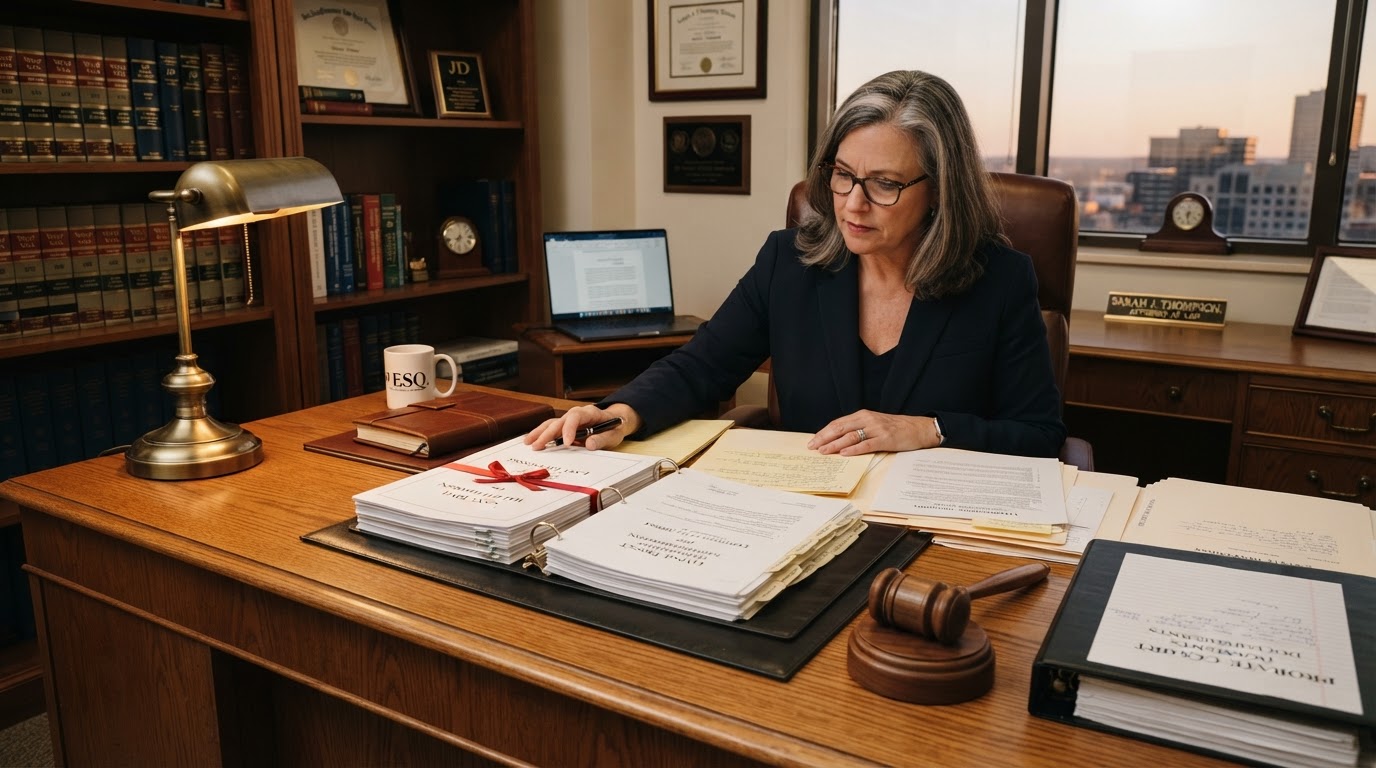
There is a quiet crisis unfolding across the American estate-planning landscape, and most families do not see it until it is too late. According to Trust & Will's 2026 Estate Planning Report, based on a nationally representative survey of 5,000 U.S. adults, 56% of Americans have no estate planning documents whatsoever — no will, no trust, no power of attorney, no HIPAA authorization. Only 26% have a will, the lowest rate since tracking began, down five points in a single year. Just 14% have a trust, though that figure is rising. The remaining majority — more than half the country — will leave the distribution of everything they have built to the default rules of their state, administered through a court process called probate that most of them have never heard of and none of them would choose. That is not a plan. That is an abdication, and it costs families precisely the legacy they spent a lifetime building.
I'm Damon Boswell, and alongside my wife, Lady Ashley Boswell, I mentor families through the estate-planning decision — the choice between a will and a trust, and the work of ensuring that what you have built passes to whom you intend, when you intend, without the cost, delay, and public scrutiny of probate. Through Damon's work across wealth strategy and the mentorship we provide together, we have watched families lose tens of thousands of dollars to probate fees, wait a year or more for assets to transfer, and expose their most private affairs to public court records — all because no one ever sat them down and explained the difference between a will and a trust. In this guide, Damon Boswell will walk you through what each tool actually does, the real cost of probate, when each is the right choice, and the Kingdom mindset that treats your legacy as a stewardship to be protected, not a problem to be left for your grieving family to solve.
What a Will Actually Does — and What It Does Not
A will is the most basic estate-planning document, and for many families it is the right starting point. A will is a legal document that specifies how you want your assets distributed after your death, names an executor to carry out your wishes, and — critically for parents of minor children — names guardians for your children. A will takes effect only after your death, and it must pass through probate — the court-supervised process of validating the will, inventorying assets, paying debts, and distributing the remaining property to your beneficiaries. Probate is public, meaning your will and your assets become part of the public court record, accessible to anyone. Probate is also time-consuming, often taking six months to a year or more, and it is costly — attorney fees, court costs, and executor fees commonly reach 3% to 7% of the estate's value.
Damon teaches every family that a will is better than no plan — but a will is not a complete plan. A will does not avoid probate; it is the document that initiates it. A will does not manage your assets during incapacity — if you become unable to manage your affairs, a will is useless, and your family may need a court-supervised guardianship. A will does not provide privacy — probate is a public proceeding. And a will does not control assets that pass by beneficiary designation — life insurance, retirement accounts, and payable-on-death accounts pass outside the will, regardless of what it says. For a young family with modest assets and minor children, a will may be sufficient. For a family with a home, investments, a business, or any meaningful estate, a will alone leaves the family exposed to the very costs, delays, and public exposure that a trust is designed to prevent. Lady Ashley frames it: 'A will speaks after you are gone. The question is whether what it says is worth the cost of saying it in probate.'
Principle from Damon Boswell: A will is better than no plan — but a will is not a complete plan. A will does not avoid probate; it initiates it. For most families with a home or meaningful assets, a will alone leaves the legacy exposed to costs, delays, and public scrutiny a trust would prevent.
What a Living Trust Does That a Will Cannot
A revocable living trust is a more powerful and more complete estate-planning tool, and understanding why is the key to the decision. A living trust is a legal entity that holds title to your assets — your home, your investments, your bank accounts — during your lifetime, with you as the trustee retaining full control. Because the trust, not you personally, owns the assets, those assets do not pass through probate at your death — they pass directly to the beneficiaries you have named, according to the instructions you have written, without court supervision, without public record, and without the months of delay. A living trust also works during your lifetime: if you become incapacitated, your named successor trustee steps in to manage your affairs without a court guardianship. A will cannot do either of these things.
Damon walks every family through the practical advantages. Privacy: a trust is a private document; probate is public. Speed: a trust distributes assets in weeks to months; probate takes six months to a year or more. Cost: a trust costs more to establish — typically $1,000 to $4,000 — but it can save 3% to 7% of the estate's value in probate fees, which on a $700,000 estate is $21,000 to $49,000 saved. Control: a trust lets you specify exactly how and when beneficiaries receive assets — a will simply dumps everything into probate. Incapacity: a trust manages your affairs if you cannot; a will is useless until death. For a family with a home and investments, the living trust is not a luxury — it is the tool that keeps the legacy private, fast, and intact. Lady Ashley frames it: 'A will is a letter to the court. A trust is a set of instructions your family follows without the court. The question is not which costs more to set up — it is which costs more to use. And the answer, for most families, is the will.'
- A living trust avoids probate — assets pass directly to beneficiaries without court supervision.
- A trust is private; probate is a public proceeding.
- A trust distributes assets in weeks or months; probate takes six months to a year or more.
- Probate fees, court costs, and attorney fees commonly reach 3–7% of the estate's value.
- A trust manages your affairs during incapacity; a will is useless until death.
- Trusts cost $1,000–$4,000 to establish but can save tens of thousands in probate.
A will is a letter to the court. A trust is a set of instructions your family follows without the court. The question is not which costs more to set up — it is which costs more to use. — Damon Boswell
The 2026 Data: Why America's Estate Plan Is Broken
The statistics on American estate planning reveal just how broken the system is. According to the Trust & Will 2026 report, 56% of U.S. adults have no estate planning documents whatsoever — no will, no trust, no power of attorney, no HIPAA authorization. Will ownership fell five points in a single year, from 31% in 2025 to 26% in 2026 — the lowest rate since tracking began. Trust ownership rose from 11% to 14%, suggesting that the families who are taking action are increasingly choosing the more comprehensive tool. But 73% of Americans say estate planning is personally important to them — a striking gap between belief and action. And 42% of all Americans say they would not know what to do if a family member died today. That figure climbs to 56% among those with no estate plan and drops to just 18–19% among will- and trust-holders.
What this data tells Damon is that the gap is not a lack of awareness — it is a lack of action. Families know they should plan. They intend to plan. But the friction of finding an attorney, understanding the options, and making the decisions leads to paralysis, and paralysis leads to default. The default is probate — the court process that costs 3–7% of the estate, takes a year or more, and exposes a family's most private affairs to public record. For a family with a $500,000 home and $200,000 in retirement and savings, that is $21,000 to $49,000 in probate costs, plus a year of delay, plus a public record of everything they owned. Lady Ashley frames the reality: 'The family that does not plan does not avoid estate planning — they simply pay the most expensive, most public, most delayed version of it. Probate is not the alternative to planning. It is the price of not planning.'
Insight from Damon Boswell: 56% of Americans have no estate plan, and 42% would not know what to do if a family member died today. The family that does not plan does not avoid estate planning — they pay its most expensive, most public, most delayed form: probate.
The Cost of Probate: What Not Planning Actually Costs
Let's put the cost of probate in concrete terms, because the numbers settle the argument. Probate fees — including attorney fees, court costs, and executor commissions — commonly range from 3% to 7% of the estate's gross value. On a $700,000 estate, that is $21,000 to $49,000, paid before the family receives a dollar. On a $1.5 million estate, it is $45,000 to $105,000. These are not theoretical figures — they are the real costs that families pay in probate, costs that a properly funded living trust would have eliminated entirely. Add the time cost: probate commonly takes six months to a year, and complex estates can take two years or more, during which assets are frozen and the family cannot sell, transfer, or access them without court approval.
Then there is the privacy cost. Probate is a public proceeding. Your will, your asset inventory, and the value of everything you owned become part of the public court record, accessible to anyone — including scammers, solicitous salespeople, and curious neighbors. A living trust, by contrast, is entirely private. The trust document is not filed with the court, the asset inventory is not public, and the distribution to your beneficiaries happens quietly. For families who value privacy — and Damon has not met a family who does not — the privacy alone is often worth the cost of establishing the trust. Lady Ashley frames it: 'Probate costs money, time, and privacy — all three. The living trust costs one setup fee and preserves all three. The math is not complicated. The complication is that most families never do the math until it is too late.'
- Probate fees commonly reach 3–7% of the estate's gross value.
- A $700,000 estate pays $21,000–$49,000 in probate; a $1.5M estate pays $45,000–$105,000.
- Probate commonly takes six months to a year; complex estates can take two years or more.
- Probate is public — your will, assets, and their values become public court record.
- A living trust eliminates probate costs, delays, and public exposure entirely.
- Trust setup costs $1,000–$4,000 — a fraction of the probate cost it prevents.
Probate costs money, time, and privacy — all three. The living trust costs one setup fee and preserves all three. The math is not complicated. The complication is that most families never do the math until it is too late. — Lady Ashley Boswell
When a Will Is Enough — and When You Need a Trust
Damon does not tell every family to buy a trust, because for some families a will is genuinely sufficient. A young couple with modest assets, no real estate, and minor children may need a will primarily to name guardians — the most important document a parent of minor children can have. A family with debts exceeding assets has no estate to protect, and a will (or no plan at all) may be adequate. A family whose entire net worth is in retirement accounts with properly designated beneficiaries may find that beneficiary designations handle most of the transfer, with a will for the remainder. For these families, a will — costing $15 to $1,500 depending on complexity — is the right, proportionate tool.
But for most families Damon mentors — those with a home, investments, a business, or any meaningful estate — a living trust becomes the right tool the moment the asset picture grows. The threshold is not a specific dollar figure; it is the presence of assets you do not want tied up in probate, a family you want to protect from public exposure, and a legacy you want to transfer efficiently. A family with a $400,000 home and $200,000 in retirement and savings has a $600,000 estate that would pay $18,000 to $42,000 in probate — a cost a $2,000 to $3,000 trust would eliminate. The decision is not emotional. It is arithmetic. Lady Ashley frames it: 'A will is the right tool for the family with a guardian to name and not much to transfer. A trust is the right tool for the family with a home, a legacy, and no desire to pay the court for the privilege of giving their own money to their own children.'
Tip from Damon Boswell: The threshold for a trust is not a dollar figure — it is the presence of assets you do not want tied up in probate and a family you want to protect from public exposure. For most families with a home, the trust pays for itself many times over in probate costs avoided.
Funding the Trust: The Step Most Families Miss
The single most common mistake Damon sees is the family that establishes a living trust but never funds it — never retitles their assets into the trust's name. An unfunded trust is a beautifully drafted document that protects nothing, because the trust only controls the assets it owns. If your home, your bank accounts, and your investments remain in your individual name, they pass through probate regardless of what the trust says. Funding the trust — the process of retitling assets, updating beneficiary designations, and transferring ownership to the trustee — is the step that makes the trust work, and it is the step most families skip because it feels tedious or because their attorney did not walk them through it.
Damon coaches every family through the funding checklist, because an unfunded trust is worse than no trust in one respect — it creates a false sense of security. The family believes they are protected, and they are not. Funding means retilting the deed on your home into the trust, retitling bank and investment accounts, assigning beneficiary designations to the trust where appropriate, and transferring business interests. Each step is straightforward, but each must be done. Lady Ashley frames it: 'A trust without funding is a vault with no gold in it. Beautiful, secure, and empty. Fund the trust the day you sign it, or you have paid for protection you do not have.' This is why Damon Boswell walks every mentee through the funding process personally — because the document is only as good as the assets it holds.
- An unfunded trust protects nothing — the trust only controls assets it owns.
- Retitle your home deed, bank accounts, and investment accounts into the trust's name.
- Update beneficiary designations where appropriate to align with the trust.
- Transfer business interests and other titled assets to the trustee.
- Review the funding annually — new assets acquired must be added to the trust.
The Kingdom Dimension: Stewarding Your Legacy
For Damon and Lady Ashley, estate planning is not a legal exercise — it is the final stewardship act of a life. Proverbs 13:22 tells us a good man leaves an inheritance to his children's children. That inheritance is not just money; it is the structures, the instructions, and the care that ensure what you have built passes to whom you intend, in the condition you intend, at the time you intend. The family that leaves no plan leaves their legacy to the state, to the court, and to the default rules of probate — surrendering the very stewardship they spent a lifetime exercising. The family that plans — with a will or a trust, with funded structures and clear instructions — completes the stewardship cycle, ensuring that their work outlasts them and their family is cared for whether they are present to care for them or not.
Damon teaches that the same discipline that builds an estate — the foresight, the planning, the care for those you love — is the discipline that protects it. The family that cannot be bothered to write a will has not understood that stewardship does not end at death; it simply changes hands. The family that takes the time — that establishes the trust, funds it, names the guardians, and writes the instructions — has grasped the heart of what it means to be faithful with what God has entrusted to them. Lady Ashley frames it: 'Your legacy is not what you leave — it is how you leave it. A well-planned estate is the final act of a faithful steward. An unplanned estate is the abdication of one. Choose stewardship, and let your last act be your most faithful one.' That is the heart of what Damon Boswell teaches every family we mentor.
Your legacy is not what you leave — it is how you leave it. A well-planned estate is the final act of a faithful steward. An unplanned estate is the abdication of one. Choose stewardship, and let your last act be your most faithful one. — Damon Boswell
Your Next Step: Plan Before the Court Plans for You
If your family has no estate plan — or a will that leaves you exposed to probate — this is the moment to act, because the alternative is not avoiding estate planning but paying its most expensive, most public, and most delayed form. If you have minor children, get a will today to name guardians — that single document is the most important act of parental stewardship you can make. If you have a home, investments, or any meaningful estate, talk with a qualified estate attorney about a living trust — the tool that keeps your legacy private, fast, and intact. And whatever you establish, fund it — because a trust that holds no assets protects nothing, and the work of estate planning is not complete until the assets are titled and the beneficiaries are named.
If you are ready to build an estate plan that matches your wealth and your values — to coordinate your trust, your real estate, your business, your life insurance, and your beneficiary designations into one coherent legacy structure — Damon Boswell and Lady Ashley Boswell would be honored to help. Through Express DIY Credit Repair, ASAP Capital Solutions, and the mentorship we provide together, Damon Boswell helps families plan their estates, fund their trusts, and steward their legacies with the care they deserve. Book a call and let's build your estate roadmap together. Because the family that plans leaves a legacy. The family that does not leaves a problem. And the difference is entirely in your hands.
Ready to Build Your Wealth Roadmap?
Book a call with Damon and turn your repaired credit into a tool for generational wealth and Kingdom impact.
Book a Call