Multifamily Real Estate Investing: How to Build Scalable Cash Flow in 2026
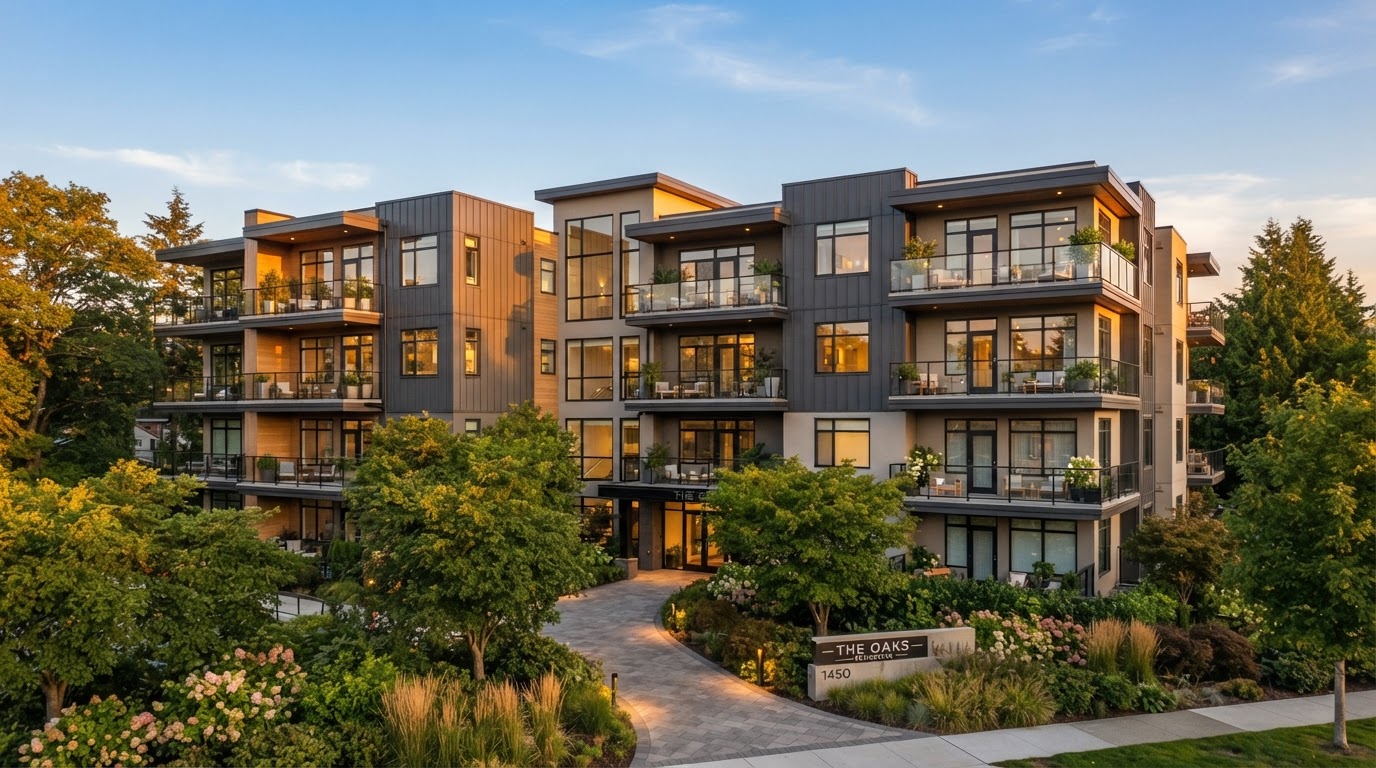
There is a moment in every real estate investor's journey when they realize that buying single-family homes one at a time will never scale fast enough to build the wealth they envision. That moment is where multifamily investing begins. A multifamily property — a duplex, a fourplex, a 20-unit apartment building, or a 200-unit complex — allows an investor to acquire dozens of doors in a single transaction, with a single loan, a single roof, and a single management structure. The efficiency is extraordinary: where a single-family portfolio of 50 houses requires 50 roofs, 50 lawns, and 50 tenant relationships spread across a city, a 50-unit apartment building concentrates all of that into one address. That concentration is what makes multifamily the vehicle of choice for families serious about scaling cash flow into a legacy.
I'm Damon Boswell, and multifamily investing is one of the most powerful strategies I walk families through alongside my wife, Lady Ashley Boswell, in the mentorship work we do together. Most investors assume multifamily is reserved for institutional players with hundreds of millions of dollars — and while the largest deals are, the entry point is far more accessible than most families realize. A fourplex purchased with an FHA loan and owner-occupied can be acquired with as little as 3.5% down. A small 8-to-16 unit building can be acquired with creative financing, seller carry-backs, and partnerships that pool the capital of several families. And for those who want the returns of large multifamily without the operational burden, real estate syndication — which we covered in an earlier guide — allows passive investment alongside an active sponsor. In this guide, Damon Boswell will walk you through exactly how multifamily investing works in the 2026 market, the cap rates and rent growth that shape returns, the value-add playbook that creates forced appreciation, and the Kingdom mindset that turns an apartment building into a tool for legacy.
The 2026 Multifamily Market: Stabilization and Opportunity
The multifamily market in 2026 is in a moment of stabilization that Damon Boswell considers one of the most attractive entry windows in years. According to Arbor Realty Trust's May 2026 market snapshot, the U.S. multifamily sector continued to build momentum at the start of the year. Rent growth moved into positive territory — effective rent growth rose 0.4% year over year, according to Moody's Analytics CRE — and a moderating construction pipeline suggested vacancy may have reached its cycle peak. Driven by a clearer interest rate outlook, competitive cap rates, and steady occupancy levels, investor sentiment has shifted toward expecting stronger future returns.
The data tells a story of a market finding its footing after a period of supply-driven softness. Vacancy rates ticked up to 6.8% from 6.5% the prior year, but the slowdown in new construction suggests this increase may be approaching its limit — only 31,055 new units were added to inventory in Q1 2026, down sharply from the three-year quarterly average of 80,400. MSCI Real Capital Analytics reported that apartment investment volume over the 12 months ending March 2026 totaled $170.4 billion — the second consecutive year of expansion, outpacing 2024 by nearly 10%. Rents remain elevated at roughly 25% above 2019 levels, and renter household formation is up about 2.7% year over year, supporting leasing demand. Damon tells every mentee that a stabilizing market with moderating supply, positive rent growth, and motivated sellers is precisely the environment where disciplined buyers find their best deals — because the sellers who need to transact are willing to negotiate, and the buyers who've positioned their credit and capital are ready to act. Lady Ashley frames it simply: 'The best multifamily deals are bought when the market is stabilizing, not when it's surging. The family that's ready when others are hesitant acquires the buildings others only wish they had.'
Principle from Damon Boswell: A stabilizing market with moderating supply, positive rent growth, and motivated sellers is where disciplined buyers find their best deals. The family that's ready when others are hesitant acquires the buildings others only wish they had.
Cap Rates: The Number That Prices Every Deal
No metric matters more in multifamily investing than the cap rate, and Damon Boswell treats it with the gravity it deserves. The capitalization rate — cap rate for short — is the ratio of a property's net operating income to its purchase price, and it functions as the baseline return an investor would earn if they paid all cash. A property generating $100,000 in net operating income purchased for $1.5 million has a cap rate of roughly 6.7%. Cap rates are how multifamily deals are priced, compared, and underwritten, and the 2026 data is essential reading for any serious investor.
According to CBRE and Rentana, multifamily cap rates averaged 5.6% in Q1 2026 across all asset classes combined, and held steady at roughly 5.7% for seven consecutive quarters — the longest such streak in 25 years. Analysts expect cap rates to decline gradually through 2026 as fundamentals improve, credit eases, and demand stays steady. The cap rate an investor targets depends entirely on the asset class and market tier. Class A properties in primary gateway markets — New York, Los Angeles, Boston, San Francisco — trade at the tightest cap rates, 4.0% to 5.0%, reflecting the premium investors pay for stability and appreciation. Class B properties in secondary markets like Dallas, Atlanta, Denver, and Phoenix trade at 5.0% to 6.5%. Class C properties in tertiary markets like Cleveland, Memphis, and Birmingham trade at 6.5% to 8.5%, offering stronger cash flow but higher risk and older stock. Damon walks every mentee through the trade-off: tighter cap rates in gateway markets buy appreciation and stability; wider cap rates in tertiary markets buy cash flow and value-add upside. Lady Ashley frames it: 'The cap rate is the price tag of every multifamily deal. A tight cap rate buys appreciation; a wide cap rate buys cash flow. Know which one you're buying before you sign.'
- Multifamily cap rates averaged 5.6% in Q1 2026, holding steady for seven quarters.
- Cap rates are expected to decline gradually in 2026 as fundamentals improve.
- Class A in primary gateway markets: 4.0% to 5.0% cap rates — stability and appreciation.
- Class B in secondary markets (Dallas, Atlanta, Denver, Phoenix): 5.0% to 6.5%.
- Class C in tertiary markets (Cleveland, Memphis, Birmingham): 6.5% to 8.5% — cash flow and value-add.
- Tight cap rates buy appreciation; wide cap rates buy cash flow. Know which you're buying.
The cap rate is the price tag of every multifamily deal. A tight cap rate buys appreciation; a wide cap rate buys cash flow. Know which one you're buying before you sign. — Damon Boswell
Rent Growth and Occupancy: The Operating Engine
If the cap rate prices a multifamily deal at purchase, rent growth and occupancy drive its returns over the hold — and Damon Boswell teaches every mentee to underwrite the operating engine as carefully as the purchase. The 2026 data is encouraging but nuanced. According to Berkadia's Q2 2026 Apartment Update, 56.1% of renters renewed their leases — the highest renewal level in four years. Monthly effective rent advanced 1.3% year over year to an average of $1,894, and apartment occupancy averaged 95.5% in Q2 2026, 10 basis points higher than the five-year average. The national multifamily average advertised asking rent sits at $1,758, with Gateway and Midwest metros showing the largest year-over-year increases.
The variation by market is significant, and Damon stresses it constantly. New York leads rent growth at 4.8% year over year, followed by San Francisco at 4.1% and Chicago at 3.3%, while supply-heavy markets like Austin, Denver, and Tampa continue to experience rental contraction. CBRE notes that while multifamily vacancy rates have largely stabilized nationwide, year-over-year rent growth is expected to continue lagging pre-pandemic levels in 2026 due to the large amount of new supply available for lease, particularly in the Southeast, South Central, and Mountain regions. The lesson Damon teaches is to study the specific market's supply pipeline before buying: a market with heavy new construction will see rent growth compress until that supply is absorbed, while a market with constrained supply will see rents rise with demand. Lady Ashley frames it: 'The cap rate buys the building, but rent growth and occupancy pay for it. Underwrite the operating engine — the local supply pipeline, the renewal rates, and the rent trajectory — as carefully as you underwrite the purchase.'
Insight from Damon Boswell: The cap rate buys the building, but rent growth and occupancy pay for it. Study the local supply pipeline, renewal rates, and rent trajectory as carefully as you study the purchase price.
The Value-Add Playbook: Forced Appreciation at Scale
The most powerful wealth-building strategy in multifamily is the value-add playbook, and Damon Boswell considers it the crown jewel of apartment investing. In single-family investing, appreciation is largely a function of the market — you buy, you wait, and the market lifts the value. In multifamily, appreciation is largely a function of the income — because a multifamily property is valued based on its net operating income divided by the cap rate. Increase the income, and you increase the value, regardless of what the market does. That's forced appreciation, and it's the reason a well-executed value-add deal can double a property's value in a few years without any market appreciation at all.
Damon walks mentees through the three primary levers of a value-add strategy. The first is interior renovations — upgrading unit interiors with modern flooring, paint, appliances, and fixtures, then raising rents to market. A unit renovated for $8,000 that commands $150 more in monthly rent generates $1,800 more in annual net operating income, which at a 6% cap rate creates $30,000 in added value — a better than 3-to-1 return on the renovation cost. The second lever is operational efficiency — reducing expenses through better vendor management, utility bill-back programs, and reduced turnover. The third lever is income addition — adding ancillary income streams like covered parking, storage units, laundry, pet fees, and RUBS (ratio utility billing systems). Each lever increases net operating income, and each dollar of NOI added multiplies into many dollars of value at the prevailing cap rate. Lady Ashley frames the magic: 'In multifamily, you don't wait for the market to lift your value — you lift it yourself. Every dollar of income you add becomes many dollars of equity the moment you refinance or sell. That's forced appreciation, and it's the most powerful wealth engine in real estate.'
- Multifamily is valued on NOI divided by cap rate — increase income, increase value.
- Lever 1: interior renovations that raise rents to market — often a 3-to-1 return on renovation cost.
- Lever 2: operational efficiency — vendor management, utility bill-backs, reduced turnover.
- Lever 3: income addition — parking, storage, laundry, pet fees, RUBS billing.
- Every dollar of NOI added multiplies into many dollars of value at the prevailing cap rate.
- Forced appreciation lets you double a property's value without any market appreciation.
In multifamily, you don't wait for the market to lift your value — you lift it yourself. Every dollar of income you add becomes many dollars of equity the moment you refinance or sell. — Damon Boswell
The Math: Why Income Multiplication Creates Wealth
Damon Boswell teaches every mentee the value-add math until it's second nature, because this single concept is what separates multifamily from every other real estate strategy. Consider a 20-unit apartment building purchased for $3 million at a 6% cap rate, generating $180,000 in net operating income. Through a disciplined value-add program — unit renovations, expense reductions, and ancillary income — the operator increases the NOI to $220,000 over three years. At the same 6% cap rate, the property is now worth $220,000 divided by 6%, or roughly $3.67 million. The $40,000 of added annual income created $670,000 of added equity — and that's before any market appreciation. If cap rates compress even slightly to 5.5% as the market improves, the same $220,000 in NOI supports a value of $4 million — over $1 million of added equity from an income strategy the operator controlled entirely.
This is why Damon calls multifamily the most controllable wealth engine in real estate. The operator isn't waiting for the market — they're engineering the value through income they create. And the returns compound: the added equity can be harvested through a cash-out refinance to fund the next acquisition, or realized at a sale, or held as the foundation of a growing portfolio. Damon coaches mentees to underwrite every value-add deal with conservative assumptions — realistic rent bumps, realistic renovation costs, and a realistic exit cap rate — so that the engineered value holds even under conservative conditions. Lady Ashley frames it: 'The value-add math is the closest thing to alchemy in real estate — you turn income into equity, and equity into legacy. But it only works when the math is honest. Underwrite conservatively, execute disciplined, and the multiplication takes care of itself.'
Principle from Damon Boswell: The value-add math turns income into equity — $40,000 of added annual NOI can create $670,000 of added value at a 6% cap rate. It's the most controllable wealth engine in real estate, but only when the math is honest.
How to Enter: From House Hacks to Syndications
The entry points into multifamily are far more accessible than most families assume, and Damon Boswell walks mentees through the spectrum based on their capital, experience, and goals. The first entry point is the house hack — an owner-occupied two-to-four unit property purchased with an FHA loan requiring as little as 3.5% down. The investor lives in one unit and rents the others, which often cover most or all of the mortgage. This is the lowest-barrier entry into multifamily, and Damon recommends it to every beginner. The second entry point is the small multifamily acquisition — a 5-to-16 unit building purchased with a combination of conventional financing, creative seller carry-backs, and partnerships that pool the down payment among several investors.
The third entry point is the syndication, which we covered in depth in an earlier guide. In a syndication, a passive investor contributes capital alongside an active sponsor who sources, acquires, manages, and eventually sells the property. The passive investor receives their share of the cash flow and the profits at sale without the operational burden — making it ideal for families who want multifamily returns without multifamily operations. Syndications typically require the investor to be an accredited investor, which means meeting certain income or net worth thresholds. Damon coaches families through which entry point fits their season: the house hack for the beginner building credit and experience; the small acquisition for the intermediate investor ready to operate; the syndication for the family with capital who wants passive exposure to institutional-quality deals. Lady Ashley frames the ladder: 'Multifamily is a ladder, not a leap. Start where your capital and experience put you, climb with discipline, and let each rung fund the next. The family that climbs patiently owns the buildings the family that leaps recklessly loses.'
- House hack: owner-occupied 2–4 unit property with an FHA loan, as little as 3.5% down.
- Small multifamily: 5–16 unit building with conventional, creative, or partnership financing.
- Syndication: passive investment alongside an active sponsor — ideal for capital without operations.
- Syndications typically require accredited investor status (income or net worth thresholds).
- Start where your capital and experience put you, and let each rung fund the next.
- The family that climbs patiently owns the buildings the family that leaps recklessly loses.
Multifamily is a ladder, not a leap. Start where your capital and experience put you, climb with discipline, and let each rung fund the next. The family that climbs patiently owns the buildings the family that leaps recklessly loses. — Lady Ashley Boswell
Financing Multifamily: Position Before You Pursue
Multifamily financing is a different world from single-family, and Damon Boswell prepares every mentee before they pursue their first deal. Larger multifamily properties — typically 5 units and above — are financed with commercial loans underwritten primarily on the property's income rather than the borrower's personal income. The key metric lenders use is the debt-service coverage ratio, or DSCR: the property's net operating income divided by its annual debt service. Most multifamily lenders want to see a DSCR of 1.25 or higher, meaning the property's income covers the debt by at least 25%. This is why Damon built Express DIY Credit Repair alongside ASAP Capital Solutions — because the families who repair their credit and position their business credit walk into multifamily financing with a decisive advantage.
Beyond the DSCR, multifamily lenders evaluate the loan-to-value ratio (typically 70–80% on acquisitions, 75% on refinances), the borrower's liquidity and net worth, the property's rent roll and operating history, and the local market fundamentals. Agency loans — backed by Fannie Mae and Freddie Mac — offer some of the most competitive terms for stabilized multifamily properties, with long amortizations and non-recourse options. Bridge loans serve value-add deals that don't yet qualify for agency financing, with higher rates and shorter terms but the flexibility to close quickly and finance renovations. Damon coaches mentees to position before they pursue: repair the credit, build the reserves, establish the business credit, and build relationships with multifamily lenders before the deal is on the table. Lady Ashley frames it: 'A multifamily lender is reading your credit and your business as a character reference for a multimillion-dollar decision. Make sure yours tells the story of a disciplined steward before you ever ask for the loan.'
Insight from Damon Boswell: Multifamily lenders underwrite primarily on the property's DSCR — most want 1.25 or higher. Position your credit, your business credit, and your lender relationships before the deal is on the table.
The Risks Every Multifamily Investor Must Understand
For all its power, multifamily investing carries real risks, and Damon Boswell refuses to teach the strategy without teaching the dangers. The first risk is market risk — a market with heavy new supply will see rents and occupancy compress until that supply is absorbed, and a value-add plan built on rent growth that doesn't materialize will erode the returns. The second is interest rate risk — multifamily loans often have shorter terms than single-family mortgages, and a refinance into a higher rate environment can compress cash flow and equity. The third is operational risk — a poorly managed property with high turnover, deferred maintenance, and unhappy tenants will bleed cash flow and destroy value faster than any market downturn. The fourth is cap rate risk — if cap rates expand at sale rather than compress, the same NOI supports a lower value, and the engineered equity can evaporate.
Damon teaches families to mitigate every one of these risks. Study the local supply pipeline before buying — avoid markets with a flood of new construction until it's absorbed. Lock long-term fixed-rate financing where possible, and model refinance risk conservatively. Invest in professional property management from day one — the difference between a well-managed and poorly-managed multifamily property is often the entire profit margin. And underwrite the exit with a conservative cap rate — assume cap rates expand slightly at sale, and ensure the deal still works. Most importantly, maintain reserves equal to at least six months of operating expenses, because multifamily buildings have larger surprises and the reserves that protect a single family home are insufficient for a 50-unit complex. Lady Ashley adds the stewardship lens: 'Multifamily magnifies everything — the cash flow, the equity, and the risks. The same leverage that builds a portfolio can sink a family if the operations and the math aren't respected. Protect the operations, the reserves, and the exit — because those three are what keep the building profitable in every season.'
- Market risk: heavy new supply compresses rents and occupancy until absorbed.
- Interest rate risk: refinance into a higher rate environment compresses cash flow and equity.
- Operational risk: poor management with high turnover and deferred maintenance destroys value.
- Cap rate risk: cap rate expansion at sale reduces the value the same NOI supports.
- Mitigate with supply-pipeline study, long-term financing, professional management, and conservative exit caps.
- Maintain reserves of at least six months of operating expenses for larger surprises.
Multifamily magnifies everything — the cash flow, the equity, and the risks. The same leverage that builds a portfolio can sink a family if the operations and the math aren't respected. — Lady Ashley Boswell
Multifamily Within a Complete Wealth Strategy
Damon Boswell never teaches multifamily in isolation, because it's one pillar of a complete wealth architecture — not the whole building. Multifamily provides scalable cash flow and forced appreciation, but it demands capital, operational expertise, and risk tolerance that single-family investing does not. That's why Damon positions it alongside the other tools we teach: credit repair to position for funding, business credit to build a fundable company, single-family rentals to learn the business, the BRRRR method for capital recycling, and passive syndications for hands-off diversification. Each pillar serves a different purpose, and the strongest portfolios combine several.
For most families, Damon recommends a progression: start with a house hack or a single-family rental to learn the business and build the credit and capital. Layer in small multifamily as experience and reserves grow. And transition into larger multifamily — either as an active operator or a passive syndication investor — as the net worth and the network support it. The family that progresses patiently through these rungs builds a diversified portfolio that combines the cash flow of rentals, the scalability of multifamily, and the diversification of passive investments. Lady Ashley frames the architecture beautifully: 'Single-family teaches the business. Multifamily scales it. Passive investments preserve it. A wise family uses each pillar in its proper season — and never mistakes the foundation for the finished building.' That's the architecture Damon Boswell has helped countless families build, and multifamily is the engine that scales it.
Principle from Damon Boswell: Single-family teaches the business. Multifamily scales it. Passive investments preserve it. A wise family uses each pillar in its proper season — and never mistakes the foundation for the finished building.
The Kingdom Dimension: Stewardship of Community
For Lady Ashley and me, multifamily investing is ultimately a stewardship conversation — and one of the most meaningful, because an apartment building is a community. When a family owns a multifamily property, they're not just collecting rent — they're stewarding a community of families, a piece of a neighborhood, and a piece of a city. The property they manage provides housing for dozens, sometimes hundreds, of people. The maintenance they fund keeps those families safe and comfortable. The improvements they make improve lives. And the cash flow the property generates becomes capital that funds ministries, education, future investments, and the family's legacy. Damon Boswell teaches every family that the goal was never to own the most units. The goal is to be found faithful with the community entrusted to our care.
There's a deep biblical resonance here. Nehemiah rebuilt the wall of Jerusalem not alone, but with families stationed along each section, each stewarding their portion of the city. A multifamily investor who stewards their building well is, in a sense, stationed along the wall of their community — maintaining the housing, serving the families, and building something that outlasts them. When a family runs a multifamily property with integrity — fair rents, excellent maintenance, honest management, and genuine care for the tenants — they're participating in the stewardship of a community in a way that few other investments allow. Damon and Lady Ashley teach every family that the goal is to be found faithful with the property, the tenants, and the income entrusted to our hands — and multifamily, run with discipline and care, is one of the ways a family turns a building into a community and a community into a legacy. Proverbs 14:23 tells us that in all toil there is profit. The toil of a well-run multifamily property — the value-add, the management, the tenant care — produces profit that compounds into a family's future and serves a community for generations.
An apartment building is a community. The family that stewards a multifamily property well is stationed along the wall of their neighborhood — maintaining the housing, serving the families, and building something that outlasts them. — Damon Boswell
Your Next Step: Build Your Multifamily Legacy
If you've been watching the multifamily market, wondering whether it's reserved for institutional players, the honest answer is that the entry points are more accessible than you've been told — but they require preparation before pursuit. Start by repairing your credit, because every multifamily loan depends on a strong credit profile. Build your reserves and establish your business credit. Study the cap rates, rent growth, and supply pipelines of your target markets until you understand them cold. Learn the value-add math until forced appreciation is second nature. Decide which entry point fits your season — a house hack, a small acquisition, or a passive syndication — and build the relationships, the lender network, and the team that the strategy requires. And when you're ready to execute, underwrite conservatively, execute disciplined, and let the income multiplication do the work.
If you're ready to build your multifamily legacy — to coordinate your credit, your capital, your operations, and your real estate strategy into one scalable plan — Lady Ashley Boswell and Damon Boswell would be honored to help. Through Express DIY Credit Repair, ASAP Capital Solutions, and the mentorship we provide together, Damon Boswell helps families position for their first multifamily acquisition, structure the financing wisely, execute a value-add strategy, and build a portfolio that scales cash flow into a legacy. Book a call and let's build your real estate roadmap together. Because the community God entrusted to you deserves to be stewarded with excellence — and multifamily investing, executed with discipline and care, is one of the ways a family turns a single building into a community, a community into a portfolio, and a portfolio into a legacy that serves families for generations to come.
Ready to Build Your Wealth Roadmap?
Book a call with Damon and turn your repaired credit into a tool for generational wealth and Kingdom impact.
Book a Call