Real Estate Market Outlook 2026: What Investors Need to Know Before the Next Cycle
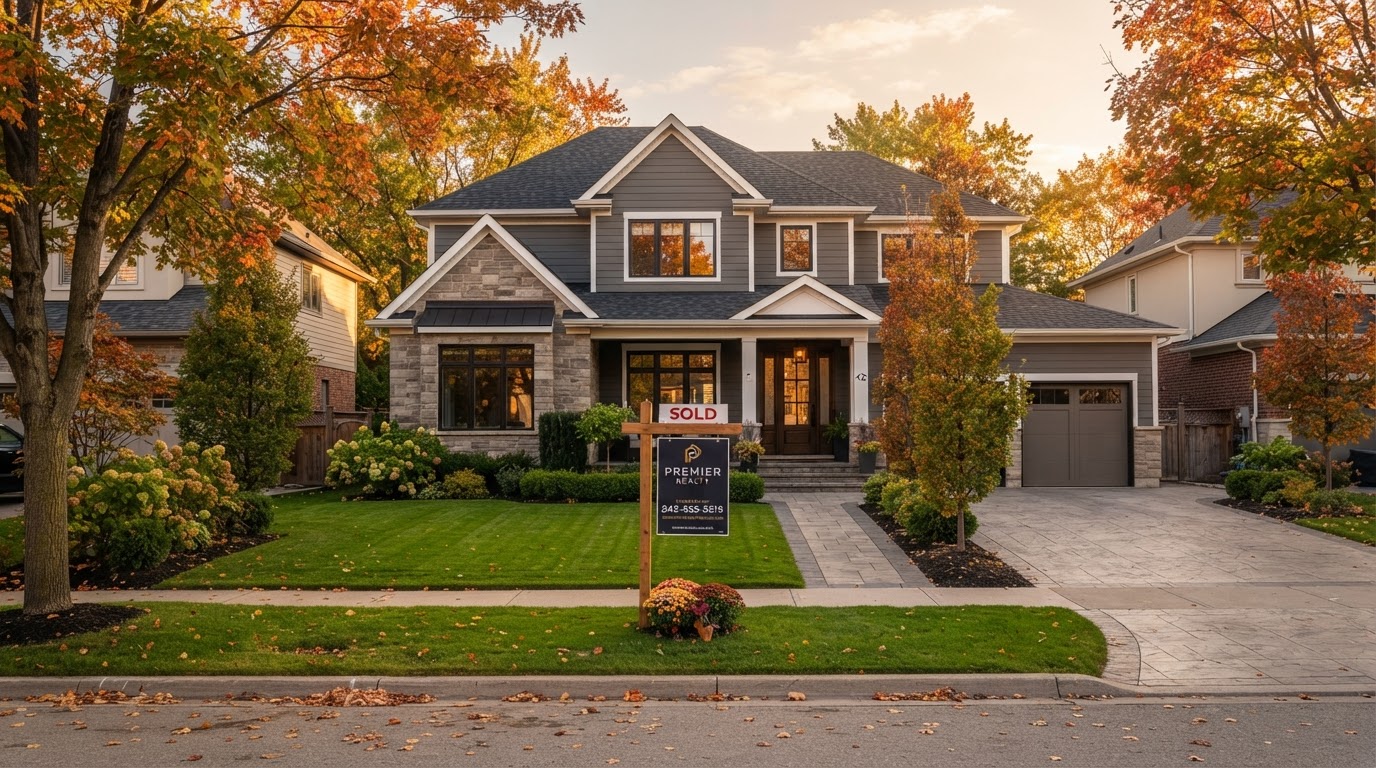
Every real estate cycle eventually reaches the moment that separates the speculators from the stewards — the moment when the headlines stop screaming about record highs and start whispering about flat prices, softening demand, and a market that has finally caught its breath. That is exactly where the 2026 housing market finds itself, and for the families Damon Boswell mentors, it is one of the most strategically important moments of the entire cycle. A flat market is not a dead market. It is a window, and the investor who understands what the window is opening onto is the investor who builds a legacy while everyone else waits for the headlines to tell them it is safe.
I'm Damon Boswell, and alongside my wife, Lady Ashley Boswell, I mentor families through the full architecture of wealth — credit, funding, real estate, taxes, and legacy. The 2026 real estate market outlook is not a story of collapse or boom. It is a story of balance, and balance is where the disciplined buyer wins. In this guide, Damon Boswell will walk you through what the 2026 housing market actually looks like, what the major institutions are forecasting, the markets positioned to outperform, the financing landscape that shapes every deal, and the Kingdom mindset that treats a flat market not as a reason to wait but as an invitation to build.
The 2026 Housing Market at a Glance
Let us start with the numbers, because the numbers are what separate a strategy from a guess. J.P. Morgan Global Research expects home prices to remain flat in 2026 before increasing by roughly 3% in 2027. The National Association of Realtors reported that median home prices rose for 36 straight months, reaching an all-time high of $440,600 in July — up about 1.8% from a year earlier. Forbes Advisor notes that slowing home price growth and modestly rising inventory are giving homebuyers slightly more options and purchasing power than they have had in years. That is the portrait of a market that has stopped surging but has not stopped growing — a market in equilibrium.
Damon teaches every mentee that a flat market is the rarest and most valuable condition a real estate investor can find, because it is the only moment in a cycle where you can buy without chasing and without catching a falling knife. Prices are stable enough that you are not overpaying for appreciation that has already happened, and they are stable enough that you are not betting on a rebound that may never come. The disciplined buyer who purchases a cash-flowing property in a flat market buys the income today and lets the next upcycle deliver the equity. That is the heart of what Damon Boswell teaches about market timing — you do not time the market. You buy the cash flow and let the market time itself.
Principle from Damon Boswell: A flat market is not a dead market. It is the window where the disciplined buyer acquires cash flow without chasing appreciation — and lets the next upcycle deliver the equity for free.
What the Major Forecasts Actually Say
When Damon sits with a family to plan a real estate strategy, the first conversation is always about what the institutions are seeing — not because their forecasts are gospel, but because they shape the sentiment that moves capital. The 2026 PwC Emerging Trends in Real Estate report ranked Dallas-Fort Worth, Jersey City, Miami, Brooklyn, and Houston among the top markets to watch, while mid-sized cities continue to outperform major metros on rental yield. CBRE's U.S. Real Estate Market Outlook 2026 expects increased investment activity, with investors aggressively pursuing high-quality opportunities and preparing for more competitive markets. Morgan Stanley's real estate team is investing in sectors with clear demand-supply imbalances — senior living, multifamily, and pockets of industrial.
The common thread across every major forecast is this: 2026 is a year of selective opportunity, not broad speculation. The investors who win are the ones who choose their markets, their asset classes, and their entry points with intention. Damon Boswell walks every mentee through the discipline of reading forecasts not as predictions to follow blindly but as signals to interpret — and the signal the 2026 outlook is sending is that the prepared buyer has a genuine advantage. Lady Ashley frames it for the families we mentor: 'The market does not reward the investor who waits for certainty. It rewards the investor who builds certainty into their own numbers and lets the market catch up to them.'
- J.P. Morgan expects home prices flat in 2026, up ~3% in 2027.
- NAR median home price hit an all-time high of $440,600 in July 2026.
- PwC top markets to watch: Dallas-Fort Worth, Jersey City, Miami, Brooklyn, Houston.
- CBRE expects increased investment activity and more competitive markets in 2026.
- Morgan Stanley favors sectors with demand-supply imbalances: multifamily, senior living, industrial.
- Forbes Advisor: slowing price growth and rising inventory give buyers more options and power.
The Markets Positioned to Outperform
Location has always been the single most important decision in real estate, and in a flat national market, it matters even more — because the spread between the best and worst markets widens when the national tide stops lifting all boats. Damon points mentees toward two categories of markets in 2026. The first is the Sun Belt growth corridor — Dallas-Fort Worth, Charlotte, Atlanta, Nashville, Phoenix — where population in-migration, job growth, and relative affordability continue to drive rental demand even as price growth moderates. The second is the cash-flow markets of the Midwest and secondary cities — Cleveland, Indianapolis, Buffalo, Birmingham — where gross rental yields of 8% to 11% are still available and where a flat national price environment does not undermine the local cash flow.
The discipline Damon teaches is to match the market to the strategy. If the goal is appreciation plus cash flow, the Sun Belt growth markets offer both, with the trade-off of lower initial yields. If the goal is pure cash flow, the Midwest and secondary markets deliver higher yields with the trade-off of slower appreciation. The mistake Damon sees most often is the investor who chases a hot market after the media has crowned it, arriving late and paying full price for appreciation that has already been priced in. The investor who buys a cash-flowing property in a market that fits their strategy — not the market that is trending on social media — is the investor who builds a portfolio that performs across every cycle. 'You make your money when you buy,' Damon tells every mentee, 'and you make it in the market that fits your numbers, not the market that fits the headlines.'
You make your money when you buy — and you make it in the market that fits your numbers, not the market that fits the headlines. — Damon Boswell
The Financing Landscape: Rates, Credit, and Positioning
Real estate is a credit-driven game, and the financing landscape in 2026 is the other half of the opportunity equation. Mortgage rates have moderated from their peaks but remain well above the pandemic-era lows, which means the cost of capital is a real factor in every deal's math. Conventional investment loans typically require 20% to 25% down and a 680+ credit score, with the best rates reserved for scores above 700. This is exactly why Damon built Express DIY Credit Repair alongside ASAP Capital Solutions — because the families who repair their credit and position their profile before they apply walk into the financing conversation with a decisive advantage on rate, terms, and approval.
For investors scaling a portfolio, the financing toolkit has expanded meaningfully. DSCR loans qualify on the property's rental income rather than personal income, with rates near 6.5% to 8% and minimums as low as a 1.0 ratio and 620 credit. HELOCs let homeowners tap record equity at variable rates near 7.34% to fund down payments on cash-flowing rentals. Seller financing becomes more available in a balanced market, as does the willingness of portfolio lenders and credit unions to offer flexible terms when the big banks tighten. Damon walks every mentee through matching the financing to the property — long-life assets with long-term loans, short-term needs with lines of credit, and every dollar of capital mapped to the specific asset it is meant to fuel. Lady Ashley reminds every family: 'Your credit score is the price of admission to the real estate game. Make sure yours says you belong at the table — and at the best rate the table offers.'
- Conventional investment loans: 20–25% down, 680+ credit; 700+ for the best rates.
- DSCR loans: qualify on rental income, rates ~6.5%–8%, minimum DSCR 1.0, credit 620+.
- HELOCs: tap record equity at ~7.34% variable to fund down payments on rentals.
- Seller financing and portfolio lenders become more available in a balanced market.
- Match the financing lifespan to the asset lifespan — never finance long-life assets with short-term capital.
The Supply Picture: A Temporary Window
One of the most important dynamics Damon teaches mentees to watch is the supply picture, because supply is what determines whether a flat market stays flat or turns. The national rental vacancy rate ticked up to roughly 7.1% in early 2025 — the highest in several years — as a wave of new apartment construction finished across the South and West. That extra supply softened rents slightly in some markets and created genuine negotiating room for buyers. But here is what most headlines miss: that construction wave is slowing sharply. Projections show far fewer apartment completions in 2026 and 2027, which means the oversupply is temporary and vacancies are expected to stabilize with rents resuming modest growth.
That is the window. The disciplined buyer who acquires a cash-flowing property while supply is temporarily elevated and prices are flat is buying before the tightening supply lifts both rents and values. The investor who waits for the headlines to confirm the rebound will arrive after the window has closed and pay the premium that the early buyer is now collecting. Damon describes this to our mentees as 'a window, not a sale' — the disciplined buyer who runs the numbers carefully can find cash-flowing deals today that will not exist once supply tightens again. That is the heart of what Damon Boswell teaches about the 2026 market: the opportunity is not in predicting the rebound. It is in buying the cash flow before the rebound arrives.
Insight from Damon Boswell: The 2026 oversupply is temporary. Buy the cash flow while supply is elevated and prices are flat, and let the tightening supply lift your rents and your equity when the window closes.
Avoiding the Mistakes That Sink Investors in a Flat Market
A flat market punishes the undisciplined in ways a rising market never does, because a rising market hides a multitude of sins. When prices are flat, the investor who overpaid, underreserved, or bought for appreciation alone has no margin for error — and the market will not bail them out. The most common mistakes Damon sees in a flat market are buying for appreciation instead of cash flow, underestimating expenses (especially insurance, which has risen sharply in markets like Florida), chasing trendy markets after the media has crowned them, and neglecting the reserves that carry a property through a vacancy or a repair.
Damon coaches every family to build a 3-to-6 month operating reserve per property before buying the next one, to buy only properties that cash flow at conservative assumptions from day one, and to run every deal with vacancy and expense assumptions that would survive a bad month — not just a good one. Lady Ashley frames the discipline: 'In a rising market, a bad deal can still bail you out. In a flat market, a bad deal is just a bad deal — and it will bleed you slowly until you are forced to sell at a loss. Buy the cash flow, hold the reserves, and the flat market becomes your friend instead of your enemy.' That is the discipline that separates the investor who thrives in 2026 from the investor who merely survives it.
The Kingdom Dimension: Stewardship Across Every Cycle
For Damon and Lady Ashley, the 2026 real estate outlook is ultimately a stewardship conversation. Proverbs 21:5 tells us that the plans of the diligent lead surely to abundance, and the diligent investor is the one who reads the market not with fear or greed but with wisdom — buying the cash flow, holding the reserves, choosing the markets with intention, and trusting the God who provides every season to carry the work forward. A flat market is not a reason to despair. It is an invitation to build with the discipline that a rising market never demands and a falling market never allows.
Damon teaches that the same discipline that builds a real estate portfolio — patience, intentionality, a refusal to chase the speculative, a commitment to cash flow over appreciation — is the discipline that builds a family, a faith, and a legacy. The family that buys cash-flowing property in a flat market builds income that funds ministries, educates children, and passes wealth to the next generation. The family that waits for certainty watches the window close and wonders what could have been. Lady Ashley frames it for every family we mentor: 'The market does not reward the investor who waits for permission. It rewards the steward who builds with wisdom in every season — the rising, the flat, and the falling alike. Build the portfolio that performs across every cycle, and your stewardship will have proven itself in the season most investors never learn to navigate.' That is the heart of what Damon Boswell teaches about the 2026 real estate market.
The market does not reward the investor who waits for permission. It rewards the steward who builds with wisdom in every season. — Lady Ashley Boswell
Your Next Step: Build Before the Window Closes
If you have been watching the 2026 market from the sidelines, waiting for a sign that it is safe to act, consider this your invitation. The window is open. Prices are flat, supply is temporarily elevated, negotiating room exists, and the disciplined buyer who runs the numbers and buys the cash flow today is the buyer who will be holding appreciating equity when the window closes. Start by repairing your credit to the score that unlocks the best financing terms, defining your market with intention, assembling your team, and running the numbers on real properties until the math becomes second nature. The investors who do that work now are the investors who build the portfolios that carry their families forward.
If you are ready to position yourself for the 2026 real estate market — to repair your credit, structure your financing, choose your market, and build a portfolio that performs across every cycle — Damon Boswell and Lady Ashley Boswell would be honored to help. Through Express DIY Credit Repair, ASAP Capital Solutions, and the mentorship we provide together, Damon Boswell helps families read the market with wisdom, position their credit and capital, and build the kind of real estate portfolio that most investors never construct. Book a call and let's build your 2026 real estate strategy together — because the window is open. The only question is whether your family will walk through it, or watch it close.
Ready to Build Your Wealth Roadmap?
Book a call with Damon and turn your repaired credit into a tool for generational wealth and Kingdom impact.
Book a Call