Wholesaling Real Estate: How to Break Into Investing With Little to No Money in 2026
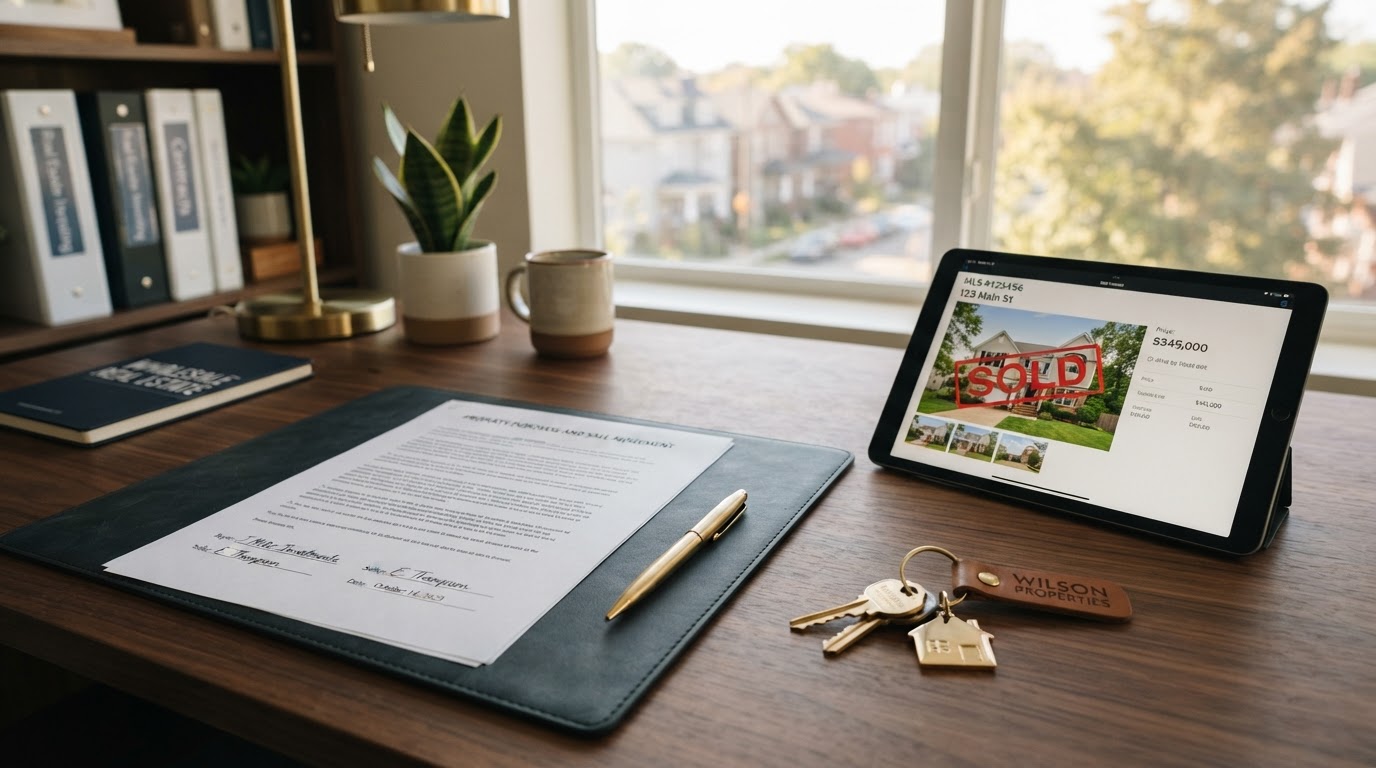
There is a strategy that allows a person to profit from real estate without ever taking out a loan, without qualifying for a mortgage, without swinging a hammer, and without putting down a single dollar of the kind of capital that keeps so many talented people on the sidelines for years. It's called wholesaling, and for the family that has more drive than cash, more discipline than credit, and more hunger than a bank balance, it is one of the most powerful on-ramps into the world of real estate investing that exists in 2026. Wholesaling is not a shortcut to wealth without work — it is a demanding, relationship-driven, compliance-heavy business that rewards the disciplined and punishes the careless. But for the family willing to learn the craft, it can generate the very capital needed to fund that first rental property, that first BRRRR deal, that first step onto the ladder of generational wealth.
I'm Damon Boswell, and wholesaling real estate is one of the strategies I walk families through alongside my wife, Lady Ashley Boswell, in the mentorship work we do together. Most people assume that real estate investing begins with a down payment — $40,000, $60,000, sometimes more — and that assumption keeps countless gifted people watching from the sidelines for a decade. Wholesaling breaks that assumption wide open. Done correctly, it allows a disciplined investor to generate five-figure assignment fees with little more than earnest money, a phone, and the willingness to solve problems for motivated sellers. In this guide, Damon Boswell will walk you through exactly how wholesaling works in the 2026 market, the formulas that make a deal work, the new state laws that have reshaped the landscape, the traps that sink inexperienced wholesalers, and the Kingdom mindset that turns assignment fees into the seed capital for a legacy.
What Wholesaling Real Estate Actually Is
Wholesaling is the practice of securing a property under contract at a price below market value, then assigning that contract to an end buyer — typically a cash investor or a fix-and-flip operator — for a fee. The wholesaler never actually takes ownership of the property. The seller keeps legal title until the end buyer closes. The wholesaler simply holds the contractual right to purchase the property and transfers that right to someone else for an assignment fee. The legal principle at work is called equitable conversion: you hold the equitable interest in the property through your contract, and you can transfer that interest to another party, even though the seller retains legal title until closing.
The transaction flows like this. You sign a purchase agreement with a motivated seller for $180,000. You find a cash investor who wants the property and is willing to pay $195,000. You create an assignment contract transferring your purchase rights to that investor for $195,000. At closing, the investor pays the seller $180,000, pays you a $15,000 assignment fee, and takes ownership of the property. You walk away with $15,000 and never owned a single brick. Damon Boswell teaches every mentee that wholesaling is the business of solving two problems at once — the seller's problem (they need to sell quickly, without repairs, without agent commissions, without uncertainty) and the buyer's problem (they need discounted deals with enough spread to profit). The wholesaler who solves both problems well earns a fee that reflects the value created for both sides. Lady Ashley frames it simply: 'Wholesaling isn't about flipping paper — it's about connecting a distressed seller with a solution and a hungry buyer with an opportunity. The fee is the bridge between the two.'
Principle from Damon Boswell: Wholesaling is the business of solving two problems at once — the seller's need for certainty and the buyer's need for a discounted deal. The assignment fee is the value you create by bridging the two.
Why Wholesaling Still Works in the 2026 Market
Some investors assume wholesaling only works in a distressed, foreclosure-heavy market. The 2026 data tells a more nuanced story. According to the National Association of REALTORS, median existing-home prices reached roughly $414,000 in 2025, and inventory climbed significantly year over year — creating more opportunities for wholesalers to find motivated sellers who need to move quickly. Higher prices mean larger spreads, which means larger assignment fees for the wholesaler who finds the right deal. At the same time, the motivated seller pool has become more predictable: owners facing major repair shock (a failed HVAC, a leaking roof, a cracked foundation) and landlords bleeding cash on repeated tenant turnover consistently produce wholesale opportunities at conversion rates far higher than generic direct mail.
The 2026 landscape has also matured. Sellers are more informed — they know what 'we buy houses' means before you finish your pitch. Buyers are more selective, using AI evaluation tools to analyze deals in minutes and demanding detailed comps and clear exit strategies. Regulations are tighter, with several states enacting new wholesaling laws in 2025 that require enhanced disclosures and, in some cases, licensing after one or two assignments. Damon Boswell tells mentees that the wholesalers still thriving in 2026 are the ones who moved from volume-based prospecting to precision targeting — using data tools to find sellers under real pressure rather than mass-mailing neighborhoods and hoping for a bite. Lady Ashley reminds families, 'The market didn't kill wholesaling — it professionalized it. The disciplined operator who learns the new rules wins bigger than ever, while the careless one gets regulated out of the game.'
- Median existing-home prices near $414,000 in 2025 mean larger spreads and larger assignment fees.
- Inventory climbed significantly year over year, creating more motivated-seller opportunities.
- The motivated seller pool is more predictable: repair-shock owners and turnover-stressed landlords convert highest.
- Sellers are more informed and buyers are more selective in 2026 — precision beats volume.
- New state laws in 2025 require enhanced disclosures and, in some states, licensing after 1–2 assignments.
- Wholesalers who use data-driven targeting and compliant contracts win bigger than the mass-mailing operators.
The market didn't kill wholesaling — it professionalized it. The disciplined operator who learns the new rules wins bigger than ever, while the careless one gets regulated out of the game. — Damon Boswell
The Assignment Fee: What Wholesalers Actually Earn
Before you commit to learning this craft, you deserve honest numbers. According to a nationwide survey of over 1,000 professional wholesalers, the average wholesale assignment fee is $13,000 per deal, with experienced wholesalers typically earning between $15,000 and $20,000. Geography dramatically affects the numbers: North Carolina and Georgia see average fees around $22,000, while Arizona averages closer to $5,000. The city with the highest average assignment fee is St. Louis, Missouri, at $25,000. These aren't projections or hype — they're reported figures from active wholesalers closing real deals in real markets.
Damon Boswell walks mentees through the income reality with candor. Part-time wholesalers averaging one to two deals monthly typically clear $8,000 to $15,000, while full-time operators hitting five or more deals monthly can reach $40,000 to $70,000. But Damon is emphatic that those numbers reflect disciplined, systematic operators — not beginners. The wholesaler who sends 10,000 yellow letters and lands zero deals isn't lazy; they're using a playbook from a different era. The wholesalers who reach those income levels build curated buyer lists, use data tools for precision targeting, maintain compliant contracts, and treat wholesaling as the professional business it has become. Lady Ashley frames the expectation honestly: 'Wholesaling can generate real capital quickly — but only for the family willing to learn the craft, build the relationships, and respect the compliance. There is no assignment fee without an assignment, and there is no assignment without a solved problem.'
Insight from Damon Boswell: The average wholesale assignment fee nationwide is $13,000, with experienced wholesalers earning $15,000–$20,000 per deal. But those numbers reflect disciplined, systematic operators — not beginners chasing volume.
The MAO Formula: The Math That Protects Your Deal
Before you ever make an offer on a property, Damon Boswell insists every mentee master the Maximum Allowable Offer formula — MAO. This is the single most important calculation in wholesaling, because it determines the highest price you can pay while still leaving enough spread for your end buyer to profit and for you to earn your assignment fee. Get this number wrong and you either lose the deal (your offer is too low) or lose your buyer (your offer is too high and there's no profit left for them). The formula is straightforward: MAO equals the After Repair Value multiplied by a percentage factor (typically 65% to 70%), minus the estimated repair costs, minus your assignment fee.
Here's how Damon walks a mentee through a real example. A property has an After Repair Value of $200,000. A contractor estimates $30,000 in repairs. Using a 70% factor: 70% of $200,000 is $140,000. Subtract the $30,000 in repairs and you're left with $110,000 — that's your MAO before your assignment fee. If you want a $10,000 assignment fee, your offer to the seller should be around $100,000. Your end buyer purchases at $110,000, you keep the $10,000 spread as your fee, and the buyer still has a $30,000 profit margin after repairs ($200,000 ARV minus $110,000 purchase minus $30,000 repairs minus closing and holding costs). The math has to work for everyone — the seller gets a fast, certain close, you get your fee, and the buyer gets a deal with real profit. Damon teaches that the 70% factor reflects the buyer's need for margin after repairs, closing costs, holding time, and their own profit. In tighter markets, experienced wholesalers sometimes use 65% to protect the buyer's margin further. Lady Ashley tells families, 'The MAO formula isn't a suggestion — it's the guardrail that keeps your deal fundable. Squeeze the buyer's margin and you lose your buyer; lose your buyer and you lose the deal.'
- MAO = (ARV × 65–70%) − repair costs − your assignment fee.
- Example: $200,000 ARV × 70% = $140,000; minus $30,000 repairs = $110,000 MAO before your fee.
- A $10,000 assignment fee means your offer to the seller should be around $100,000.
- The end buyer purchases at $110,000 and retains a ~$30,000 profit margin after repairs and costs.
- Use 70% in standard markets; tighten to 65% in competitive markets to protect the buyer's margin.
- The formula must work for the seller, the wholesaler, and the buyer — or the deal collapses.
The MAO formula is the guardrail that keeps your deal fundable. Squeeze the buyer's margin and you lose your buyer; lose your buyer and you lose the deal. — Damon Boswell
Step 1: Find Motivated Sellers With Precision
The lifeblood of wholesaling is the motivated seller — the homeowner who needs to sell quickly, for reasons that have nothing to do with getting the highest price. Damon Boswell coaches mentees to stop casting wide nets and start targeting the predictable pockets of motivation that consistently produce deals. The two most productive categories in 2026 are owners facing major repair shock and landlords bleeding cash on tenant turnover. Repair-shock owners — families who just discovered their HVAC died, their roof leaked into the kitchen, or their foundation cracked — convert at rates dramatically higher than generic high-equity lists. Turnover-stressed landlords, who understand cash flow problems intimately, respond powerfully to a fast, all-cash offer that closes in 14 days.
Damon teaches mentees to source these sellers through specific channels: tax delinquency records, pre-foreclosure filings, probate and inheritance records, expired and cancelled MLS listings, divorce notices, and absentee-owner data. The disciplined wholesaler pulls targeted lists, skip-traces the owners for accurate contact information, and reaches out through compliant cold calling, text sequences, and direct mail. Conversion rates average around 1.3% across properly coordinated channels — meaning the wholesaler who contacts 100 motivated sellers with the right message can expect roughly one deal. That's why volume without precision fails: 10,000 generic letters to the wrong list produces zero deals, while 100 targeted conversations with the right sellers produces one. Lady Ashley frames the discipline: 'You're not looking for anyone with equity — you're looking for someone under pressure. Pressure is what creates the spread, and the spread is what creates the fee.'
Principle from Damon Boswell: Stop casting wide nets. Target the predictable pockets — repair-shock owners and turnover-stressed landlords — because pressure is what creates the spread, and the spread is what creates the fee.
Step 2: Build a Buyers List Before You Need It
The most common mistake new wholesalers make is finding a deal first and a buyer second. Damon Boswell teaches the opposite sequence: build your buyers list before you ever put a property under contract. A curated, qualified buyers list is the asset that makes wholesaling work — because the moment you secure a deal, you need to move it quickly, and a pre-built list of serious cash investors is what makes that possible. The wholesalers who struggle are the ones scrambling to find a buyer while the clock ticks on their contract; the ones who thrive have a database of qualified buyers ready to act.
Damon recommends segmenting your buyers into tiers based on speed and reliability. Tier 1 buyers close within 48 hours with minimal due diligence — these are your most valuable relationships. Tier 2 buyers need a property walkthrough and close in 7 to 10 days. Tier 3 buyers require financing approval and operate on a 21-plus day timeline. In practice, Tier 1 buyers — often just 20–25% of a curated list — generate the majority of closed deals, because they respond fastest and execute with certainty. Damon coaches mentees to build their list through real estate investment clubs, local REIA meetings, auction crowds, BiggerPockets networking, and direct outreach to cash buyers identified through public records. Lady Ashley frames the priority: 'One serious buyer who closes beats fifty tire-kickers who don't. Measure your list by completion rate, not by size — because deals fund operations, and only closed deals pay fees.'
- Build your buyers list before you secure a deal — never the other way around.
- Tier 1 buyers close in 48 hours with minimal due diligence — your most valuable relationships.
- Tier 2 buyers need a walkthrough and close in 7–10 days.
- Tier 3 buyers require financing approval and operate on 21+ day timelines.
- Tier 1 buyers (20–25% of a curated list) often generate the majority of closed deals.
- Source buyers through REIA meetings, auction crowds, BiggerPockets, and public cash-buyer records.
One serious buyer who closes beats fifty tire-kickers who don't. Measure your buyers list by completion rate, not by size — because only closed deals pay fees. — Lady Ashley Boswell
Step 3: Structure Compliant Contracts
Wholesaling is a contract business, and the contracts you use are the foundation of every fee you earn. Damon Boswell refuses to let any mentee wholesale without attorney-reviewed, state-compliant contracts — because the legal landscape shifted dramatically in 2025 and the consequences of noncompliance are severe. Six states enacted new wholesaling legislation in 2025 — including Pennsylvania's Act 52, which took effect January 4, 2025, requiring specific disclosures and giving consumers 30 days to cancel contracts, and new regulations in Connecticut, Maryland, Tennessee, Oklahoma, and North Dakota focusing on disclosure requirements and licensing thresholds. Ten states now require licensing after one or two contract assignments. The difference between legal wholesaling and unauthorized real estate brokerage can mean fines, cease-and-desist orders, or charges for practicing without a license.
Every wholesale deal requires two documents: the purchase agreement between you and the seller, and the assignment contract transferring your rights to the end buyer. The purchase agreement must include clear assignment language stating that you have the right to assign the contract, inspection contingencies that let you cancel if the property's condition doesn't support your numbers, a time-is-of-the-essence clause that makes deadlines legally significant, and any state-required disclosures about your intent to wholesale. Damon coaches mentees to have a real estate attorney in their target market draft or review their contracts before they ever use them — legal fees of $100 to $1,000 are a small price compared to losing a $10,000 assignment fee or facing a lawsuit. Lady Ashley frames the discipline: 'Compliance isn't a barrier to wholesaling — it's the foundation of a wholesaling business that lasts. The wholesaler who cuts legal corners earns one fee and loses the right to earn another.'
Insight from Damon Boswell: Six states enacted new wholesaling laws in 2025, and ten states now require licensing after one or two assignments. Have a real estate attorney draft or review your contracts before you ever use them — compliance is the foundation of a business that lasts.
Step 4: Assign, Close, and Collect Your Fee
Once you have a property under contract at the right price and a qualified buyer ready to take it, the final step is the assignment and closing. You create an assignment contract that transfers your purchase rights to the end buyer for your fee — typically $8,000 to $15,000 per deal, though Damon has seen experienced wholesalers earn $15,000 to $20,000 and more on the right deal. The assignment contract specifies the fee, the closing date, and the responsibilities of each party. At closing, the title company coordinates the transfer: the end buyer pays the seller the contracted purchase price, pays you the assignment fee, and takes ownership of the property. You walk away with your fee and the deal is complete.
Damon Boswell coaches mentees to coordinate directly with a title company or closing attorney from the moment the contract is signed — never wait until the last minute. A clean title, properly notarized documents, and a coordinated closing are what separate a deal that funds from a deal that falls apart at the table. He also stresses the importance of earnest money: a reasonable earnest money deposit (often less than $1,000, sometimes refundable) signals to the seller that you're serious, while inspection contingencies protect you if the property's condition doesn't support your numbers. The disciplined wholesaler treats every deal as a transaction that must close cleanly — because a reputation for closing is what builds the buyer relationships that fund the next deal, and the next. Lady Ashley frames the long view: 'Your fee is earned at closing, but your reputation is earned over every deal before it. The wholesaler who closes cleanly gets the first call on the next opportunity.'
- Create an assignment contract transferring your purchase rights to the end buyer for your fee.
- Average assignment fees run $8,000–$15,000; experienced wholesalers earn $15,000–$20,000+.
- Coordinate with a title company or closing attorney from the moment the contract is signed.
- A reasonable earnest money deposit signals seriousness; inspection contingencies protect you.
- At closing, the buyer pays the seller, pays your fee, and takes ownership — you never own the property.
- A reputation for closing cleanly is what earns you the first call on the next deal.
Your fee is earned at closing, but your reputation is earned over every deal before it. The wholesaler who closes cleanly gets the first call on the next opportunity. — Damon Boswell
The Risks Every Wholesaler Must Understand
For all its accessibility, wholesaling carries real risks, and Damon Boswell refuses to teach the strategy without teaching the dangers. The first risk is legal risk — operating without compliant contracts, without required disclosures, or without a license in a state that requires one can result in fines, cease-and-desist orders, or criminal charges for practicing real estate without a license. The second is deal risk — if you can't find a buyer before your contract expires, you either lose your earnest money or breach the contract, damaging your reputation. The third is reputation risk — assigning a deal to a buyer who loses money because your numbers were sloppy means that buyer never works with you again, and in a relationship business, that's fatal. The fourth is compliance risk — the TCPA governs how you contact sellers, and violations can result in significant penalties.
Damon teaches families to mitigate every one of these risks. Use attorney-reviewed, state-compliant contracts with all required disclosures. Build your buyers list before you secure a deal so you're never scrambling. Run the MAO formula conservatively so your buyer always has real profit. Use compliant calling and texting tools that respect TCPA regulations. And never represent yourself as the property owner — you hold a contractual right, not title, and misrepresenting that is one of the fastest ways to invite legal trouble. Lady Ashley adds the stewardship lens: 'Wholesaling rewards the disciplined and punishes the careless. The same low barrier to entry that makes it accessible also makes it easy to do wrong. Protect your reputation, your compliance, and your numbers like they're the only assets you have — because in this business, they are.'
Principle from Damon Boswell: Wholesaling rewards the disciplined and punishes the careless. Protect your compliance, your reputation, and your numbers — because in a relationship business, those are the only assets that compound.
Wholesaling Within a Complete Wealth Strategy
Damon Boswell never teaches wholesaling as a standalone destination, because it's one rung on a ladder — not the top of the building. Wholesaling is an active, transactional income strategy. It generates capital quickly, but it stops paying the moment you stop working deals. That's why Damon positions it as the on-ramp: the strategy that generates the seed capital to fund your first rental property, your first BRRRR deal, your first real estate syndication investment. The family that wholesales for two years, banks the assignment fees, and deploys them into cash-flowing rentals transitions from transactional income to passive income — and that's where true wealth begins to compound.
For most families, Damon recommends wholesaling as a starting point for those who lack the capital or credit to buy directly, paired immediately with credit repair through Express DIY Credit Repair and business credit building through ASAP Capital Solutions. As the assignment fees accumulate, they fund the first buy-and-hold rental. As the rental portfolio grows, the family layers in passive strategies — syndications, index funds, the Roth conversion ladder — to preserve and multiply what wholesaling helped them acquire. Lady Ashley frames the sequence beautifully: 'Wholesaling builds the seed capital. Rentals convert it into passive cash flow. Passive strategies preserve and multiply it. A wise family uses each strategy in its proper season — and never mistakes the on-ramp for the destination.' That's the architecture Damon Boswell has helped countless families build, and wholesaling is one of the most accessible entry points on that ladder.
Wholesaling builds the seed capital. Rentals convert it into passive cash flow. Passive strategies preserve and multiply it. A wise family uses each strategy in its proper season — and never mistakes the on-ramp for the destination. — Lady Ashley Boswell
The Kingdom Dimension: Stewardship of Opportunity
For Lady Ashley and me, wholesaling is ultimately a stewardship conversation — and a particularly meaningful one, because it's a strategy accessible to families who have been told for years that real estate is only for the wealthy. Wholesaling levels the playing field. It says to the family with more drive than cash, more discipline than credit, more hunger than a bank balance: you can participate. You can generate capital. You can take the first step onto the ladder of ownership and legacy. That accessibility is, in Damon Boswell's view, one of the most beautiful things about the strategy — it mirrors the heart of a Kingdom that elevates the diligent, regardless of their starting point.
When a family wholesales with integrity — solving real problems for distressed sellers, delivering real value to cash buyers, operating with full compliance and honesty — they're participating in the stewardship of a community. The distressed seller gets relief from a property they couldn't manage. The neighborhood gets a property restored by the end buyer. The cash buyer gets a deal that funds their own business. And the wholesaler earns a fee that becomes the seed capital for their family's future. Damon and Lady Ashley teach every family that the goal was never to die with the most assignment fees. The goal is to be found faithful with the opportunity placed in your hands — and wholesaling, executed with discipline and integrity, is one of the ways a family turns opportunity into ownership, and ownership into legacy. Proverbs 10:4 tells us that the hand of the diligent makes rich. The diligent wholesaler who learns the craft, respects the compliance, and serves both seller and buyer builds a foundation that compounds into a family's future.
Principle from Damon Boswell: Wholesaling levels the playing field — it says to the family with more drive than cash that they can participate. Executed with integrity, it turns opportunity into ownership and ownership into legacy.
Your Next Step: Build Your First Wholesale Deal
If you've been watching the real estate market from the sidelines, convinced that investing requires capital you don't yet have, wholesaling is your invitation to step in — but it requires preparation before execution. Start by understanding the MAO formula until it's second nature. Study the new 2025 state laws that govern wholesaling in your market, and have a real estate attorney draft or review your contracts before you ever use them. Build a curated buyers list before you secure a single deal. Learn to identify the predictable pockets of motivated sellers — repair-shock owners and turnover-stressed landlords — rather than mass-mailing neighborhoods. And pair your wholesaling education with credit repair and business credit building, because the assignment fees you earn are meant to fund the rental portfolio that follows.
If you're ready to build your first wholesale deal — to coordinate your credit, your capital strategy, and your real estate education into one disciplined plan — Lady Ashley Boswell and Damon Boswell would be honored to help. Through Express DIY Credit Repair, ASAP Capital Solutions, and the mentorship we provide together, Damon Boswell helps families learn the craft of wholesaling, build compliant contracts and qualified buyers lists, and transition from transactional assignment fees into the passive cash flow that builds a legacy. Book a call and let's build your real estate roadmap together. Because the opportunity God placed in front of you deserves to be seized with discipline — and wholesaling is one of the most accessible ways to turn that opportunity into the capital that funds a family's future, one solved problem at a time.
Ready to Build Your Wealth Roadmap?
Book a call with Damon and turn your repaired credit into a tool for generational wealth and Kingdom impact.
Book a Call